

USA Roof Masters inspects roofs for hail and wind damage in Pennsylvania, New Jersey and New York’s Southern Tier. Our HAAG Engineering certified inspectors walk every slope, chalk and photograph each finding, and give you a written Forensic Causation Report. The inspection takes about an hour, and there is no charge for the inspection or the report.
HAAG Engineering certified inspectors
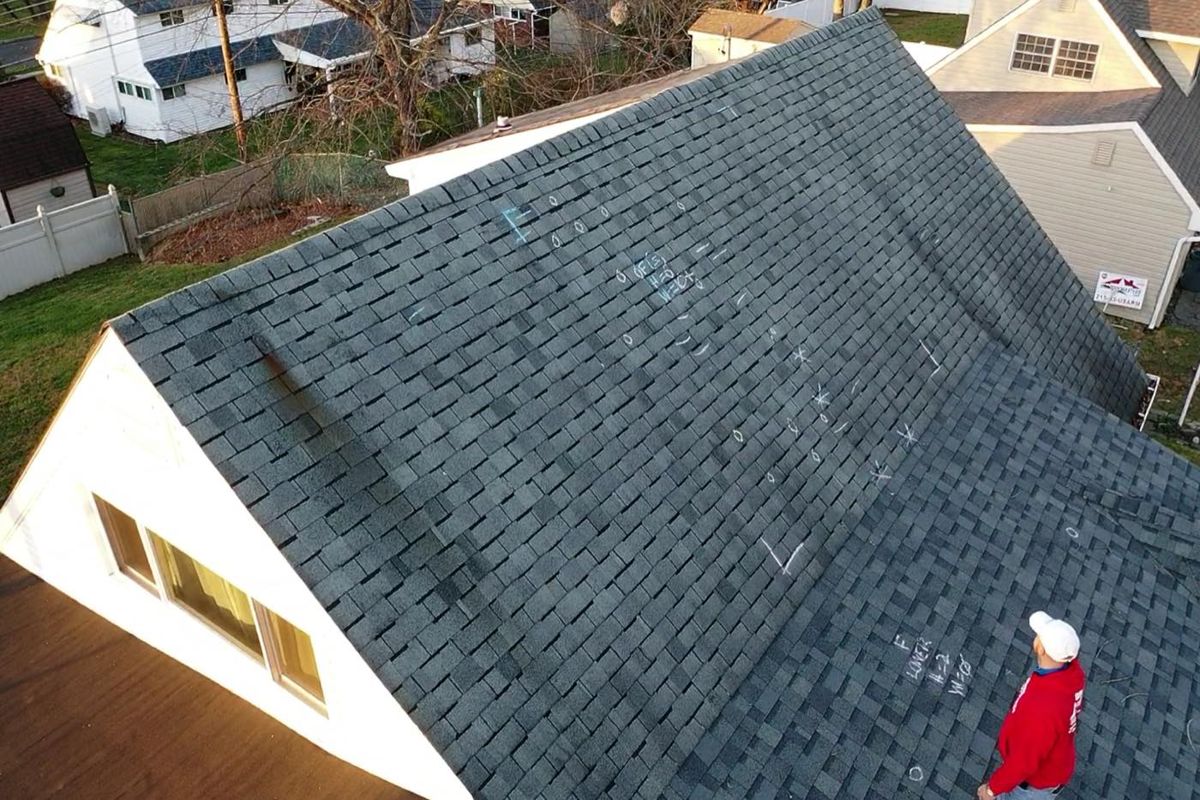
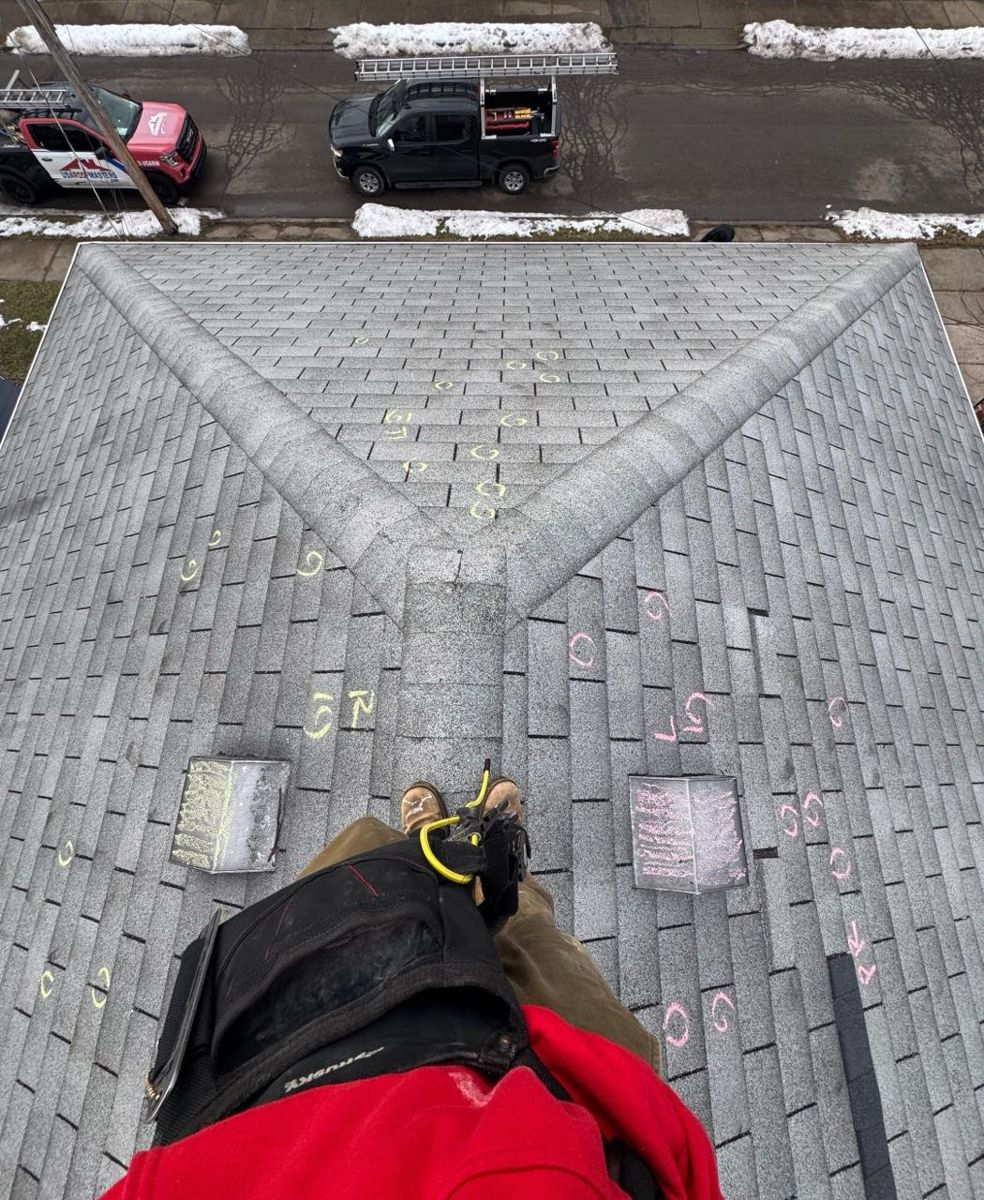
Our HAAG Engineering certified inspectors perform a detailed inspection and document everything they see. They work in a set order on every home: ground-level metals first, then siding and trim, then every slope of the roof, then any interior damage. A 10 ft by 10 ft test square is chalked on each slope, every hit inside it is circled and counted, and each finding is photographed twice. Blisters, manufacturing marks, foot traffic and age are told apart from hail by shape, location and pattern, and documented separately.
If we find damage, we show you the photos; if your roof has no damage, we tell you. See also our advanced forensic roof inspections page.
Why a detailed inspection matters
After a hailstorm, many homeowners look outside, see nothing wrong, and often have no leaks. Wind damage is usually easy to spot: shingles and branches on the ground. Hail damage usually is not visible from the ground.
A shingle roof has several water-shedding layers, so hail can damage the top layer while the roof keeps shedding water for a while. Loosened granules often stay put at first; rain and wind wash them away over months or longer. Exposed asphalt then breaks down faster in the sun, and over time water can work through the damaged shingle.
The signs of a specific hail strike also fade as the surface weathers. That is why an inspection soon after a storm is helpful.
- Hail damage is usually not visible from the ground.
- Hail damage often does not cause a leak right away.
- Signs of a hail strike fade as granules wash away.
- Damaged shingles can be more vulnerable to the next storm.
- Older, weathered shingles can crack from smaller hail than new ones.
Hail damage, explained
Granules are the shingle's protective surface against sun and weather. Hail knocks them loose, bruises the shingle and leaves marks that are easy to miss from the ground. Here is what our inspectors look for, slope by slope, and why we check every side of the house.
What a hit does
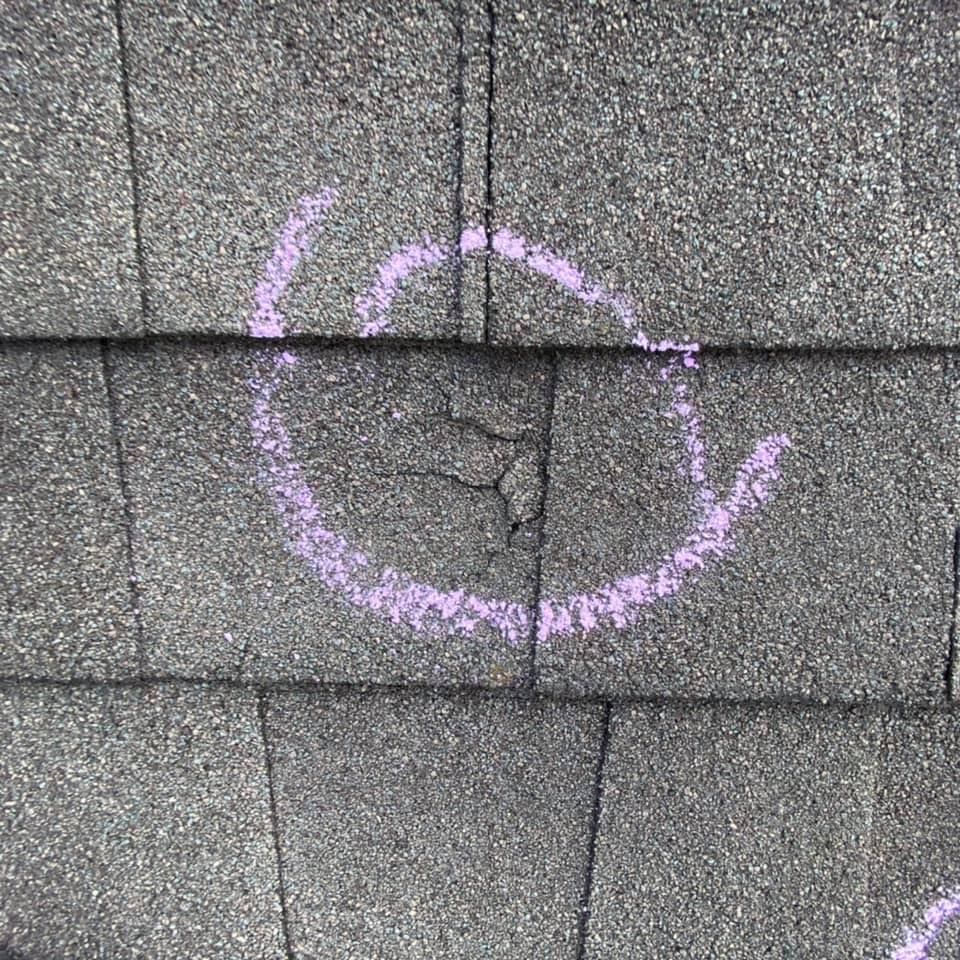
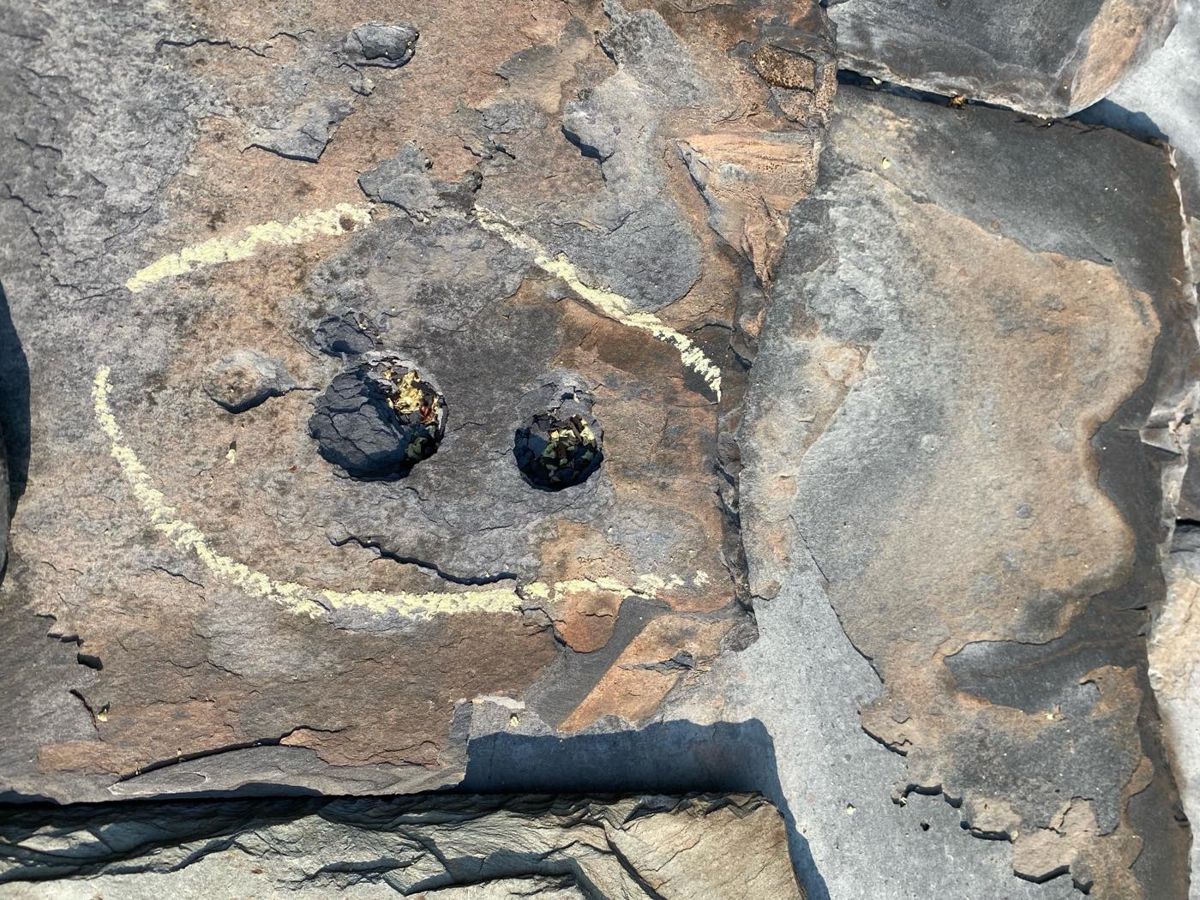
A hail impact knocks granules off and presses others into the asphalt, leaving a round bruise. The inspector presses it. A soft spot can mean the fiberglass mat underneath is cracked, which weakens the shingle even when the surface looks only lightly marked.
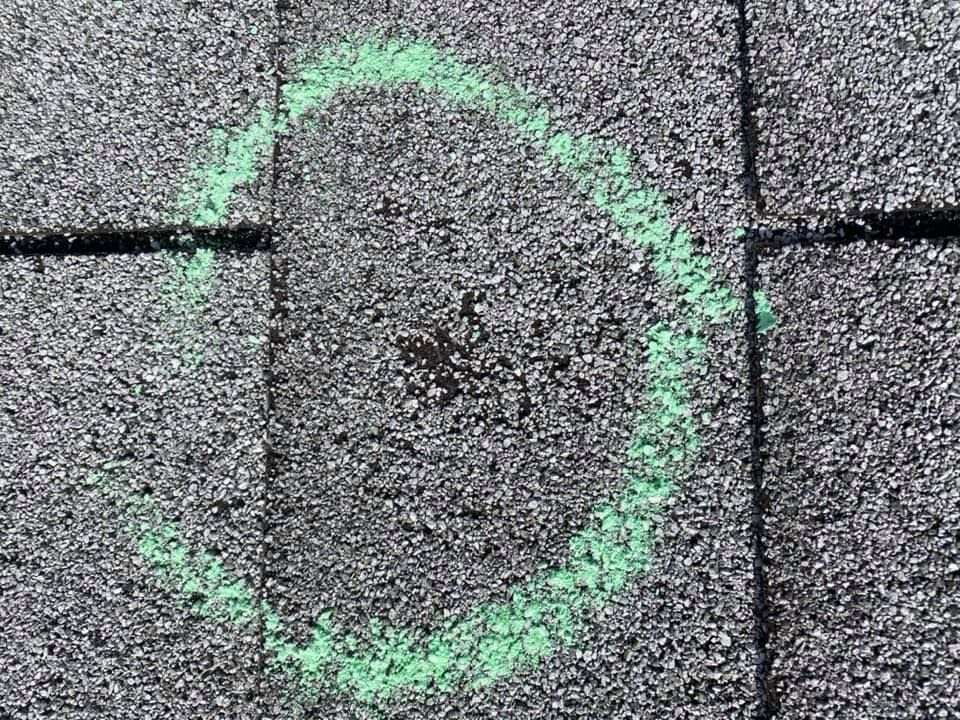
Fresh hits and older hits
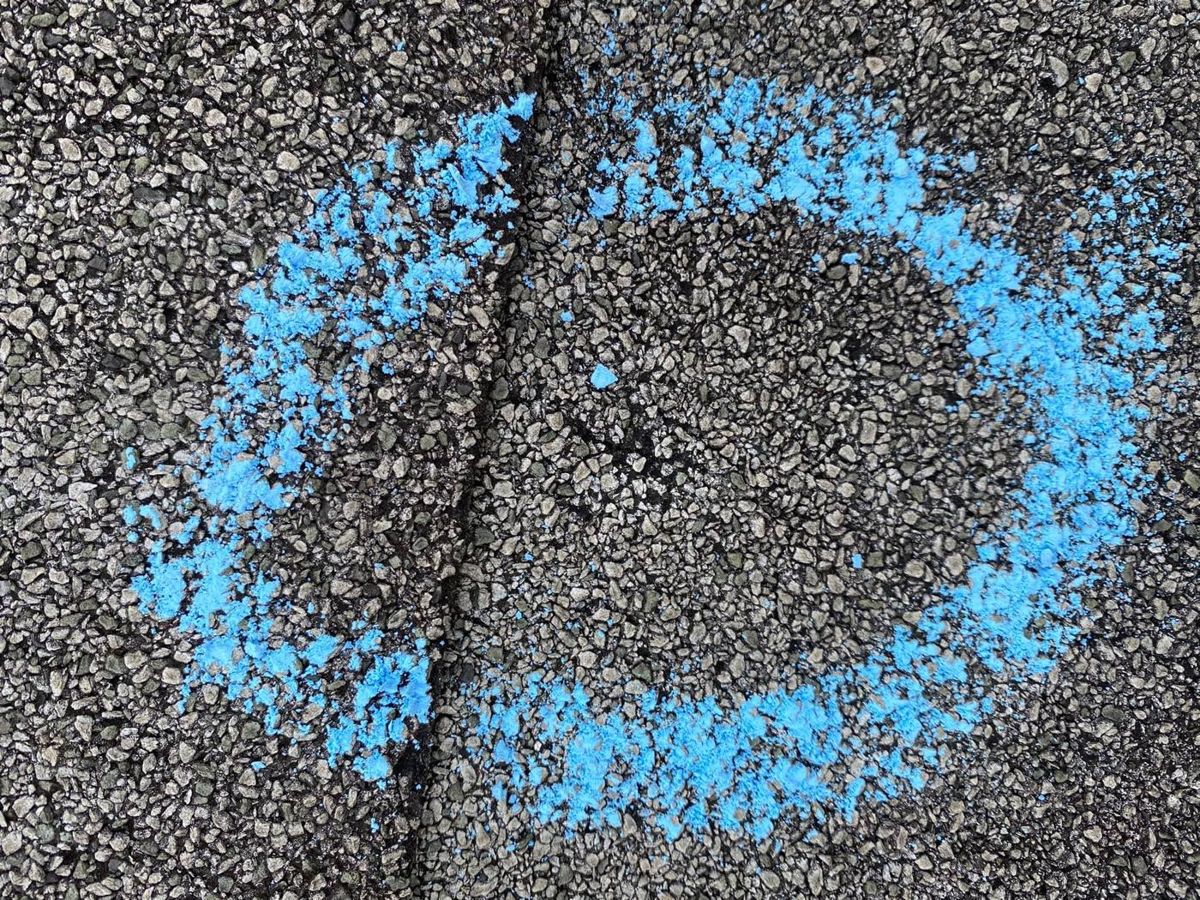
Fresh hits look like dark, shiny circles where granules were knocked away. They dull over the following weeks, but the granule loss remains.
Random hits, more on the storm side
Hail lands randomly across a slope, not in neat rows. More hits land on the sides of the house that faced the storm, and wind-driven hail leaves oval or teardrop marks that point the way the wind came from. That is why every slope and every side is checked.
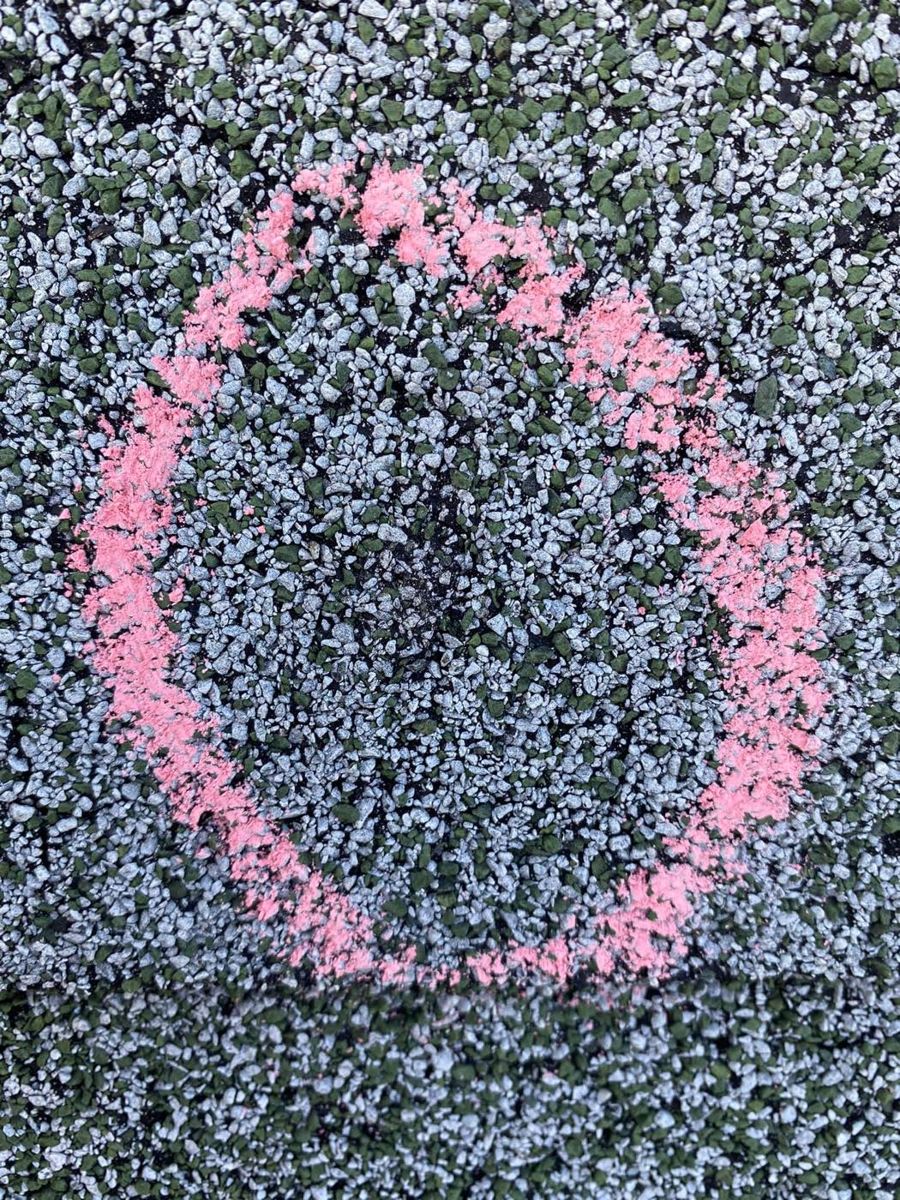
Texture hides hits
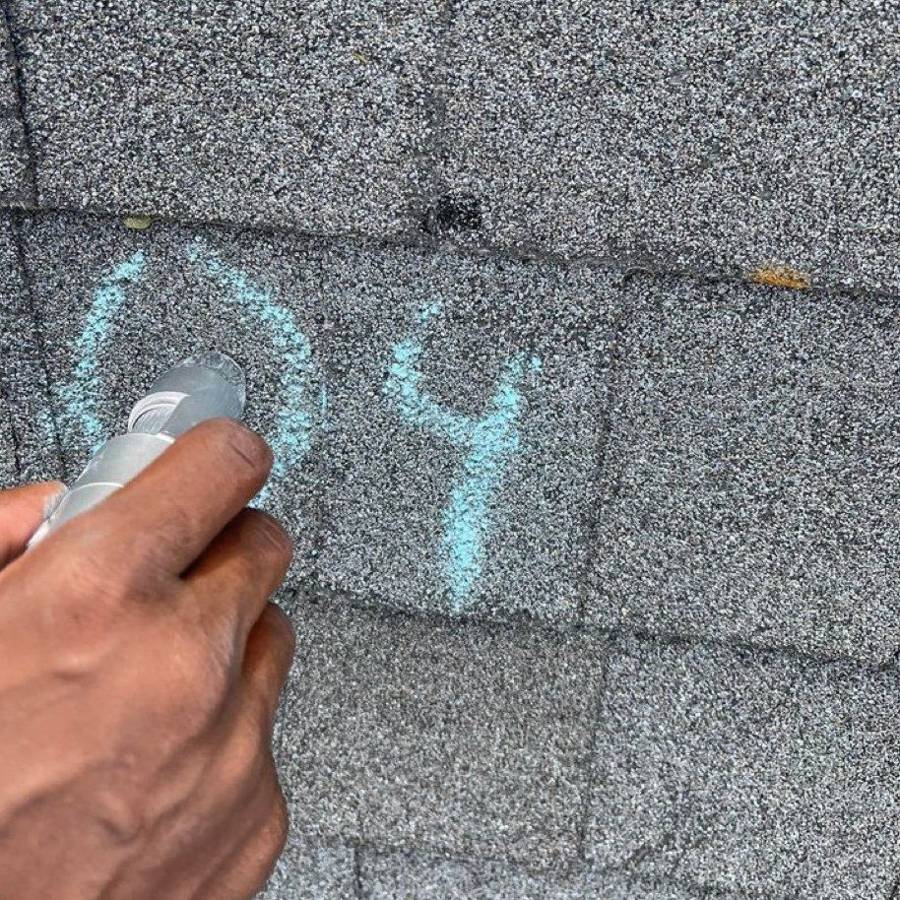
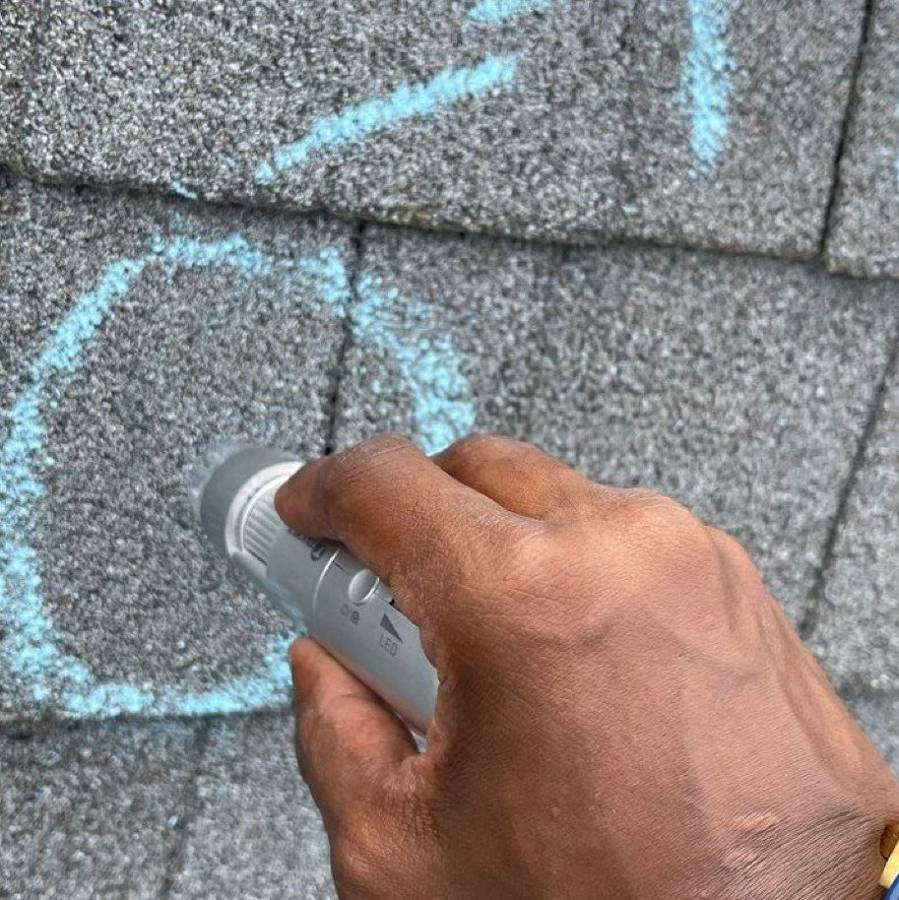
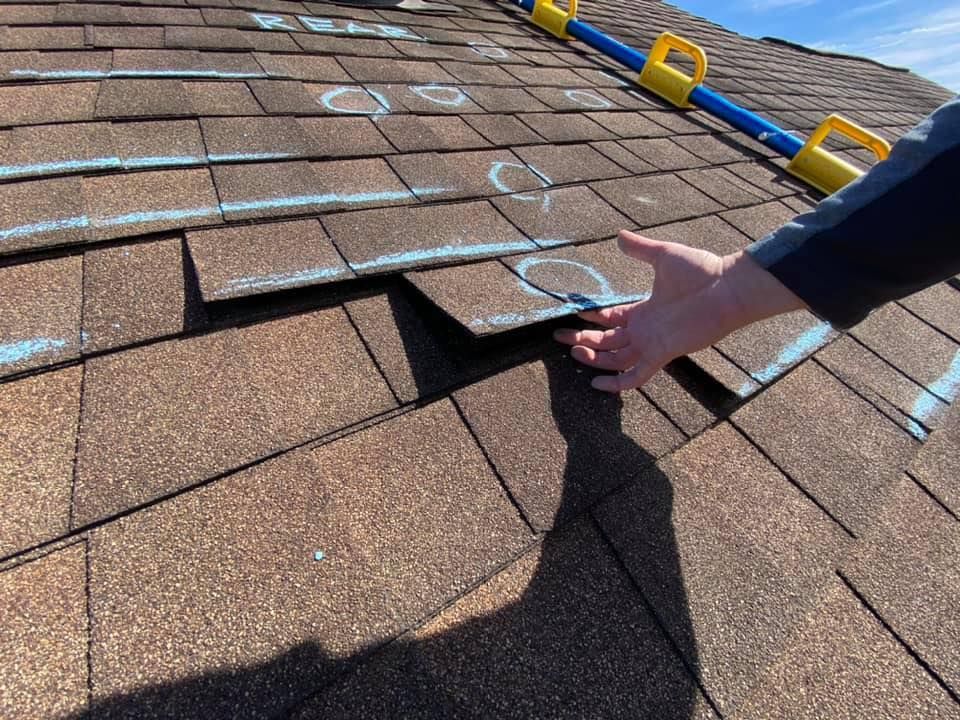
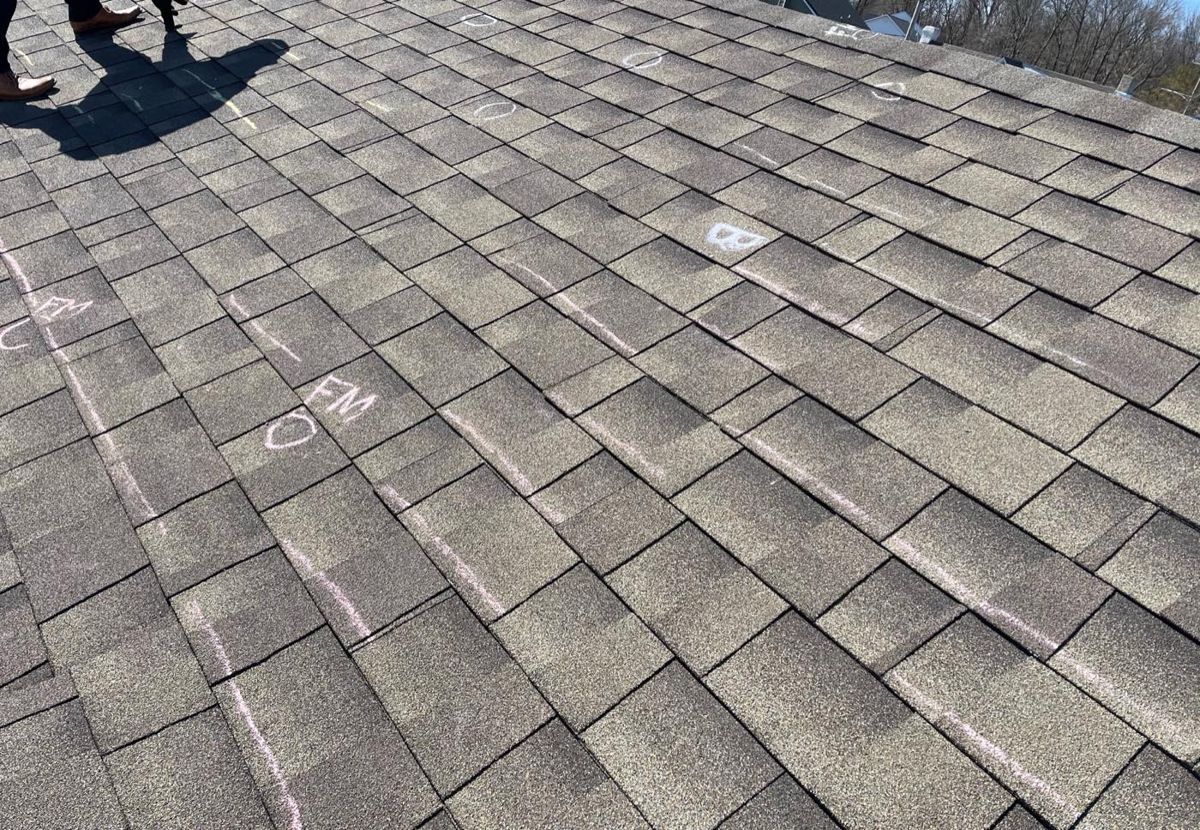
Thicker laminate shingles can hide hits in their texture. The inspector circles each confirmed hit in chalk so it shows clearly in the photos.
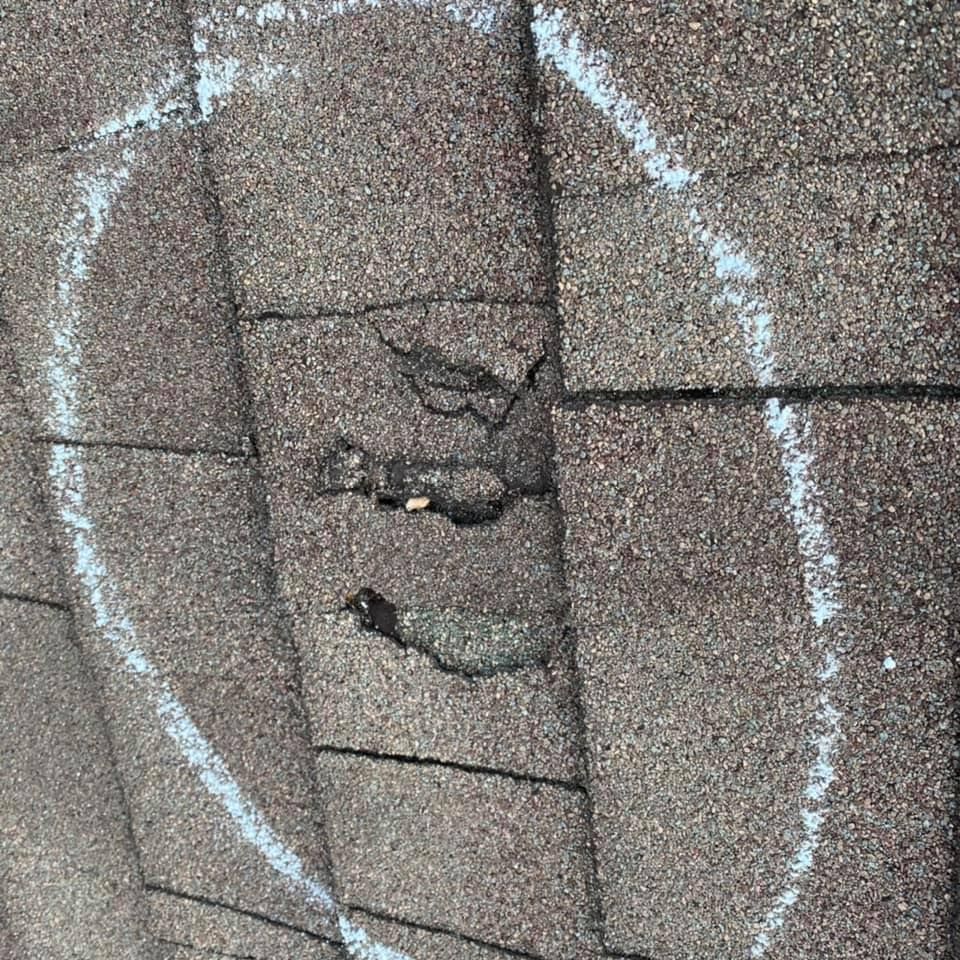
Size matters
Hail about 1 inch (quarter size) and larger can damage asphalt shingles, especially older ones, and older shingles can be damaged by smaller hail than new ones. Large stones can split shingles and crack pipe boots. Only an inspection tells what a given storm did to a given roof.
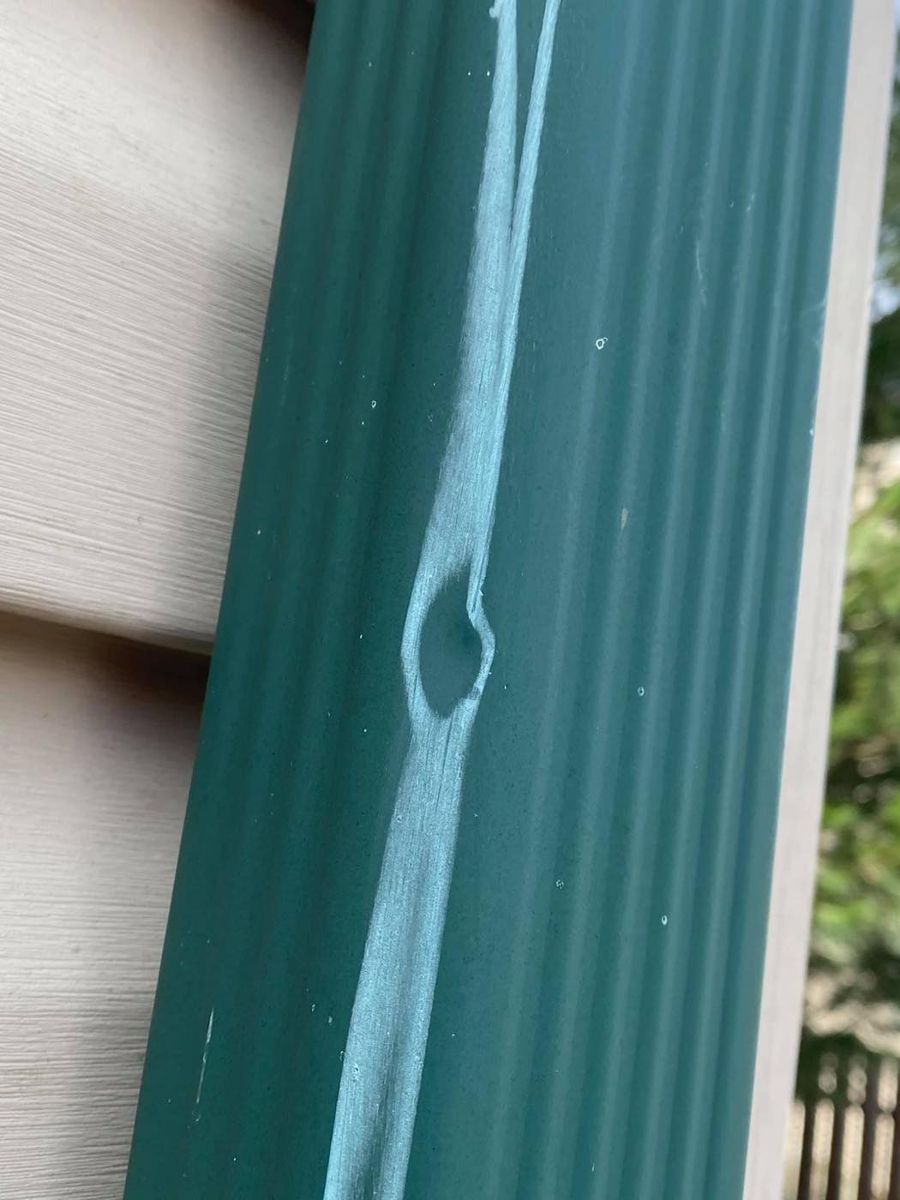
Soft metals remember
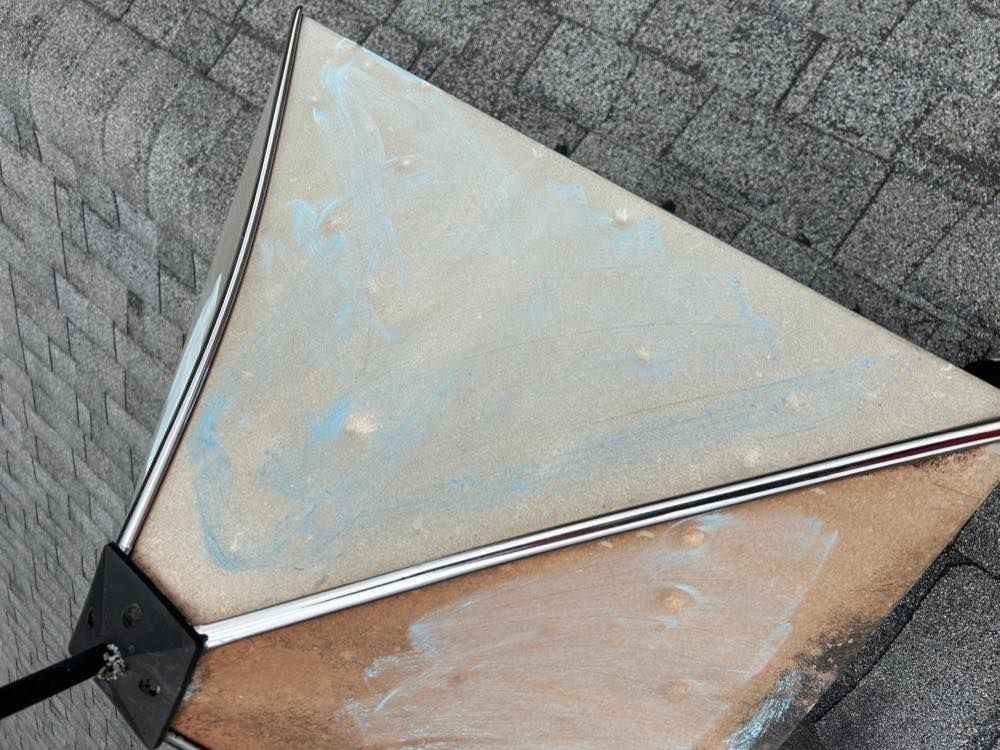
Gutters are thin, fully exposed aluminum, so they dent easily and help show the size of the hail.
A closer look, under the microscope
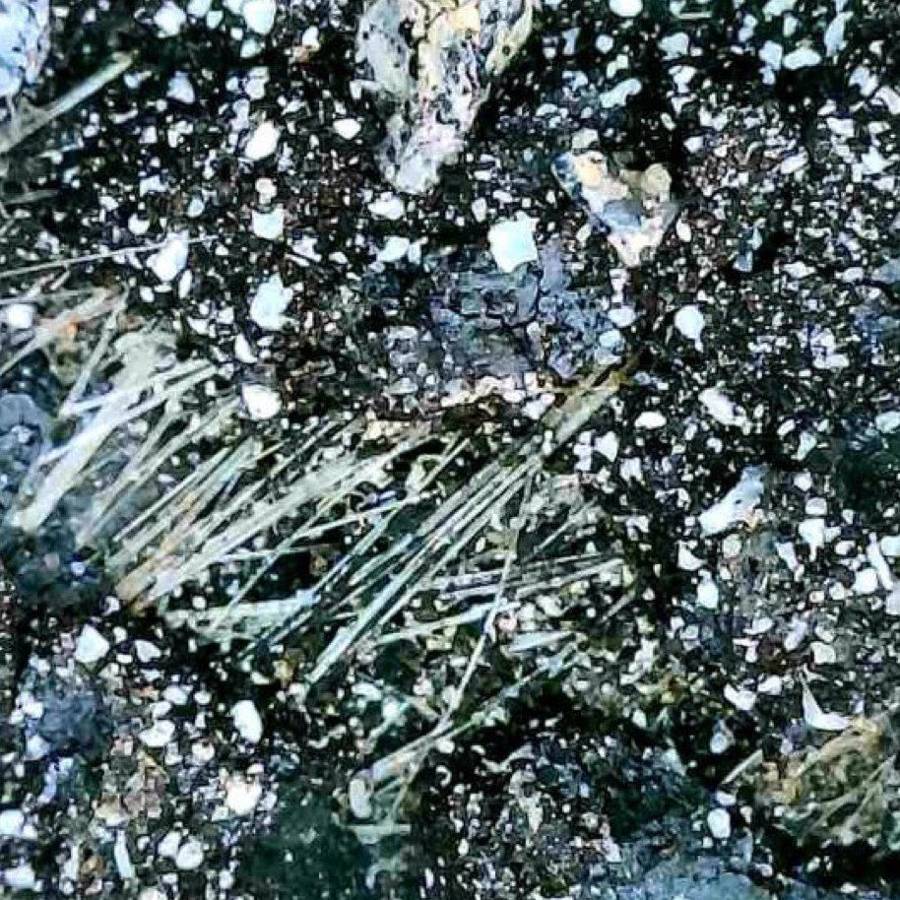
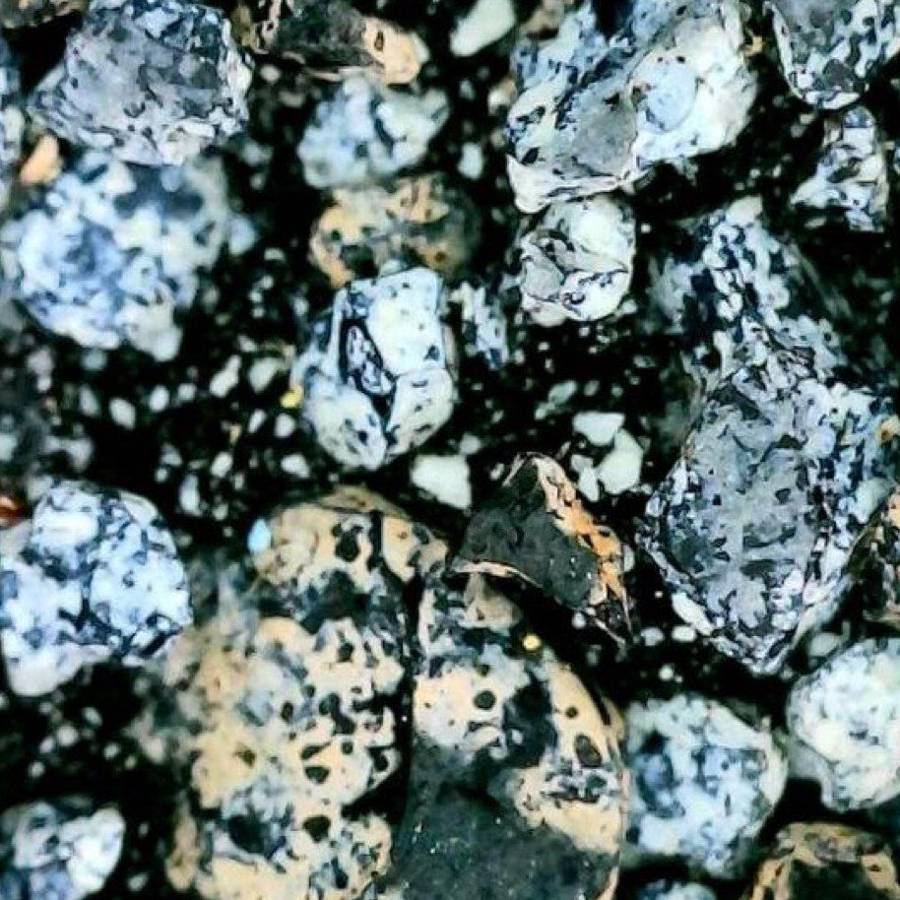
Some hail damage is too small to judge by eye. Our inspectors carry a pocket microscope so they can look at a hit up close, and they check a comparison spot on the same roof. You get these photos with your report.
Soft metals are witnesses
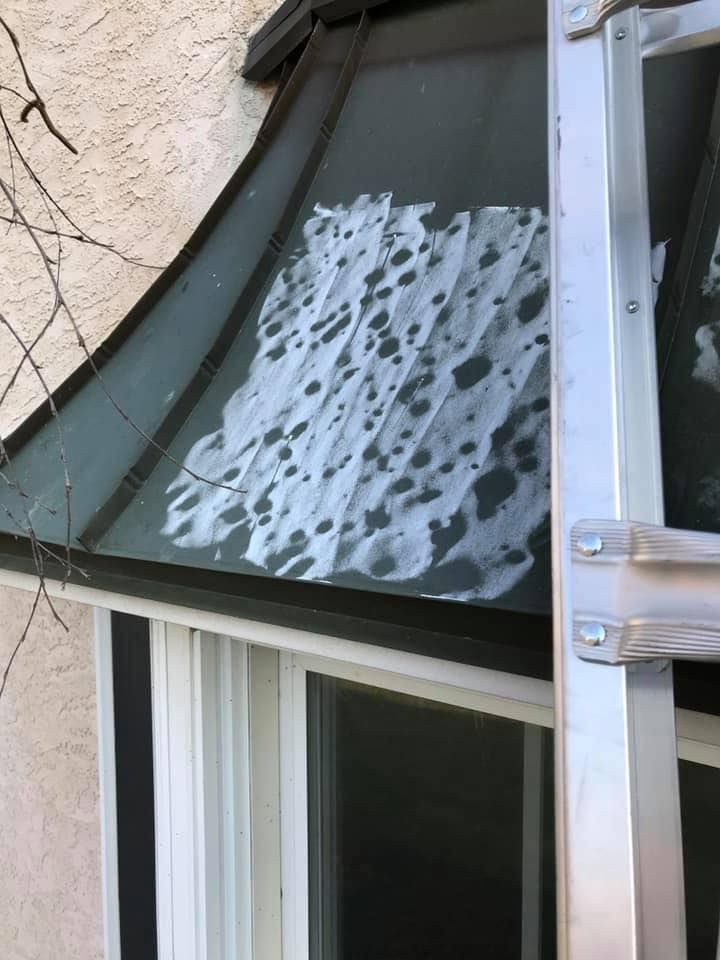
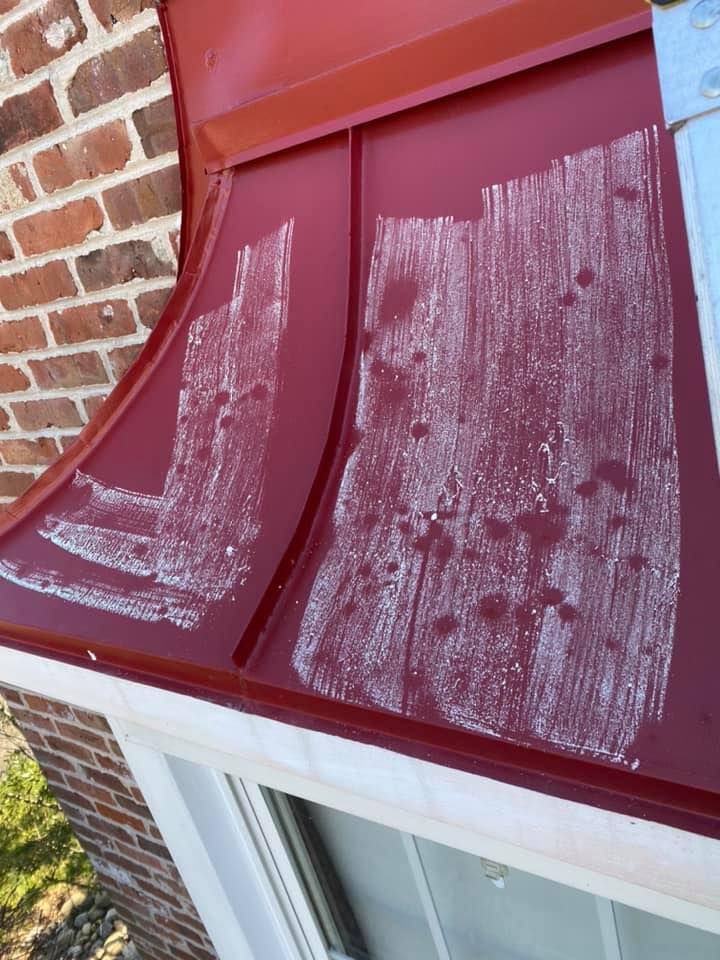
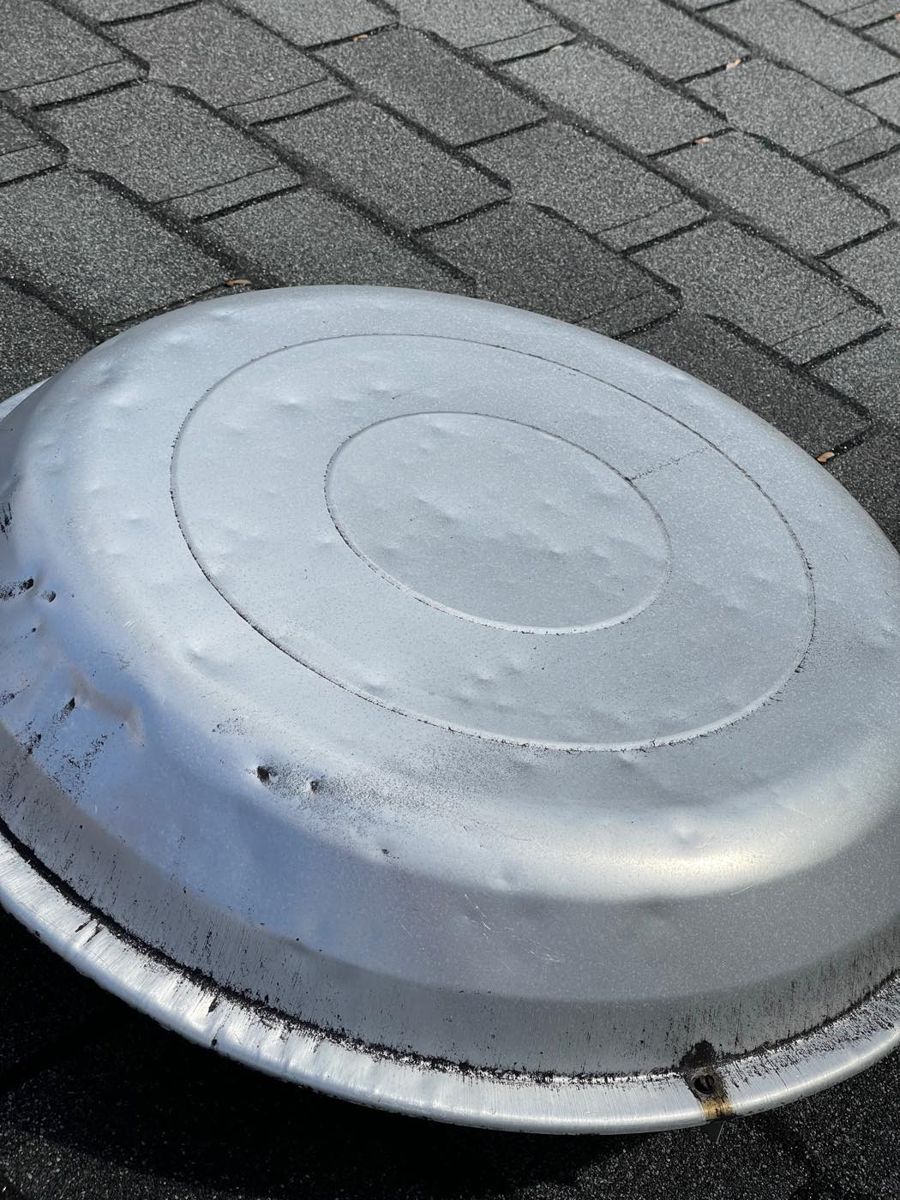
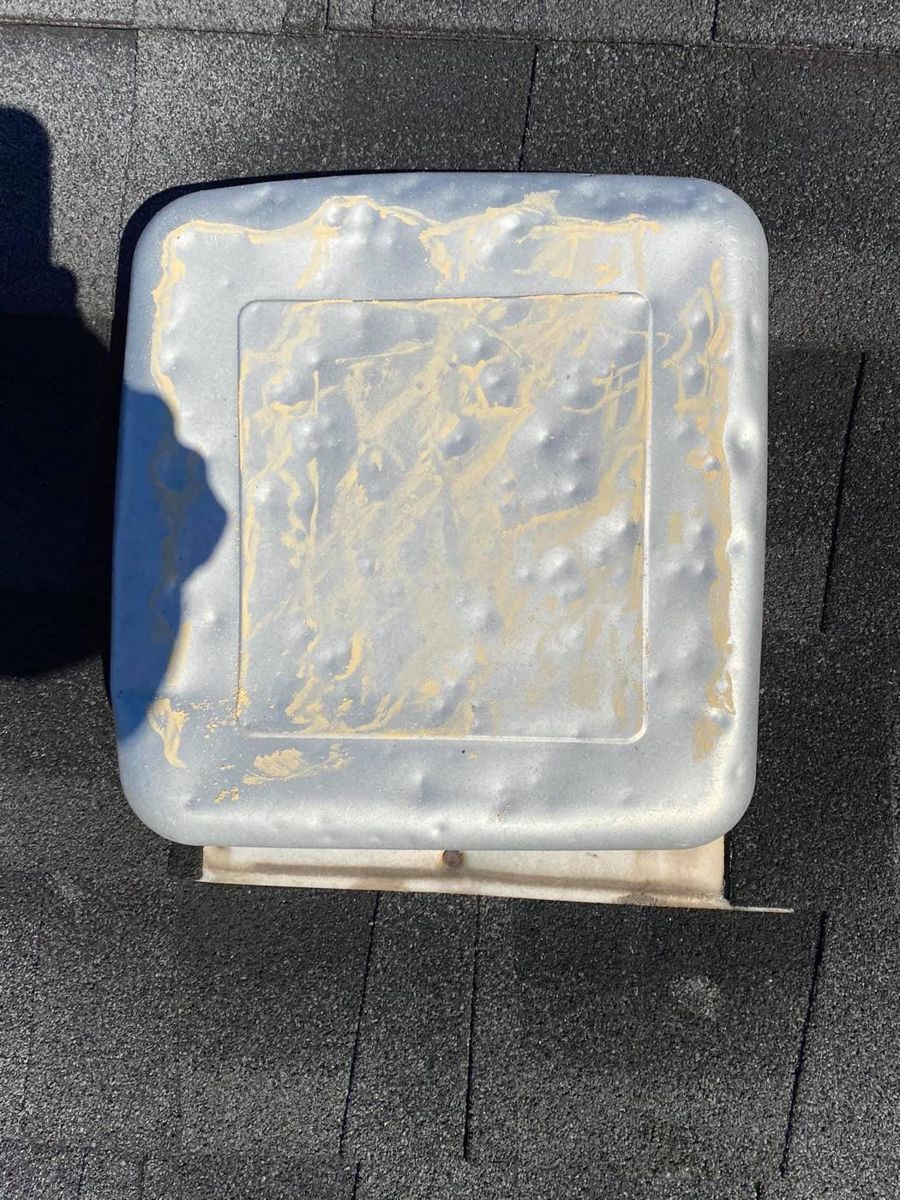
Aluminum gutters, downspouts, window wraps and sills, drip edge, vents, pipe collars, flashing, A/C condenser fins, window screens, mailboxes and even cars dent in hail, and the dents last. Downspouts usually dent only on the face that pointed toward the storm. Dents on ground-level metals help confirm a hailstorm hit the home before anyone goes on the roof.
Other signs: torn leaves on large-leaf plants, light splash marks on patio furniture and railings, small broken branches, and granules collecting in gutters and at downspout outlets.
Wind damage, explained
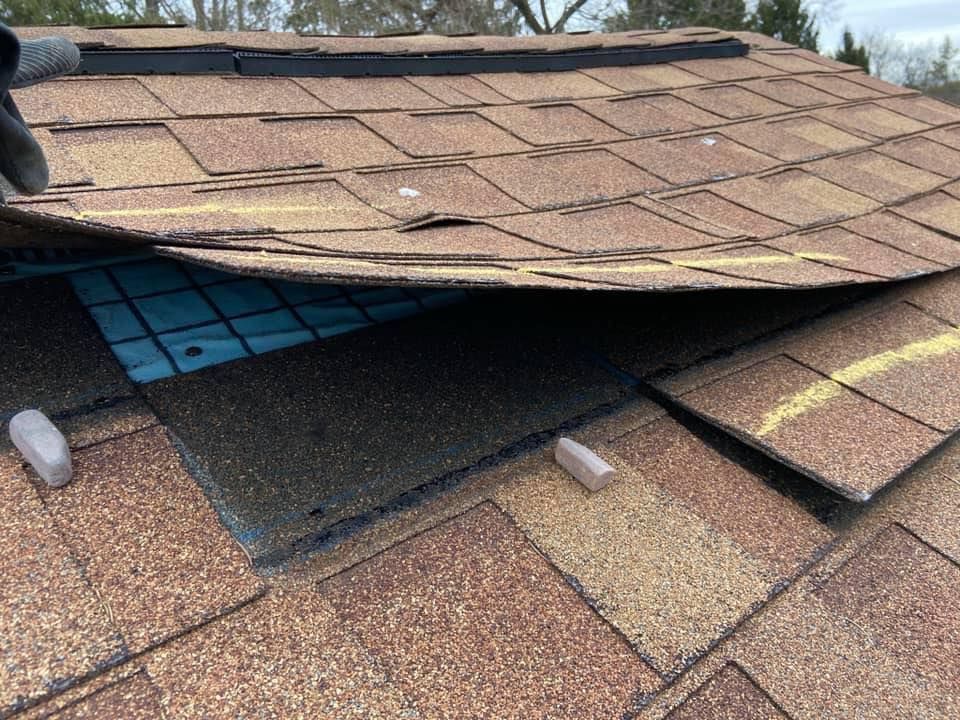
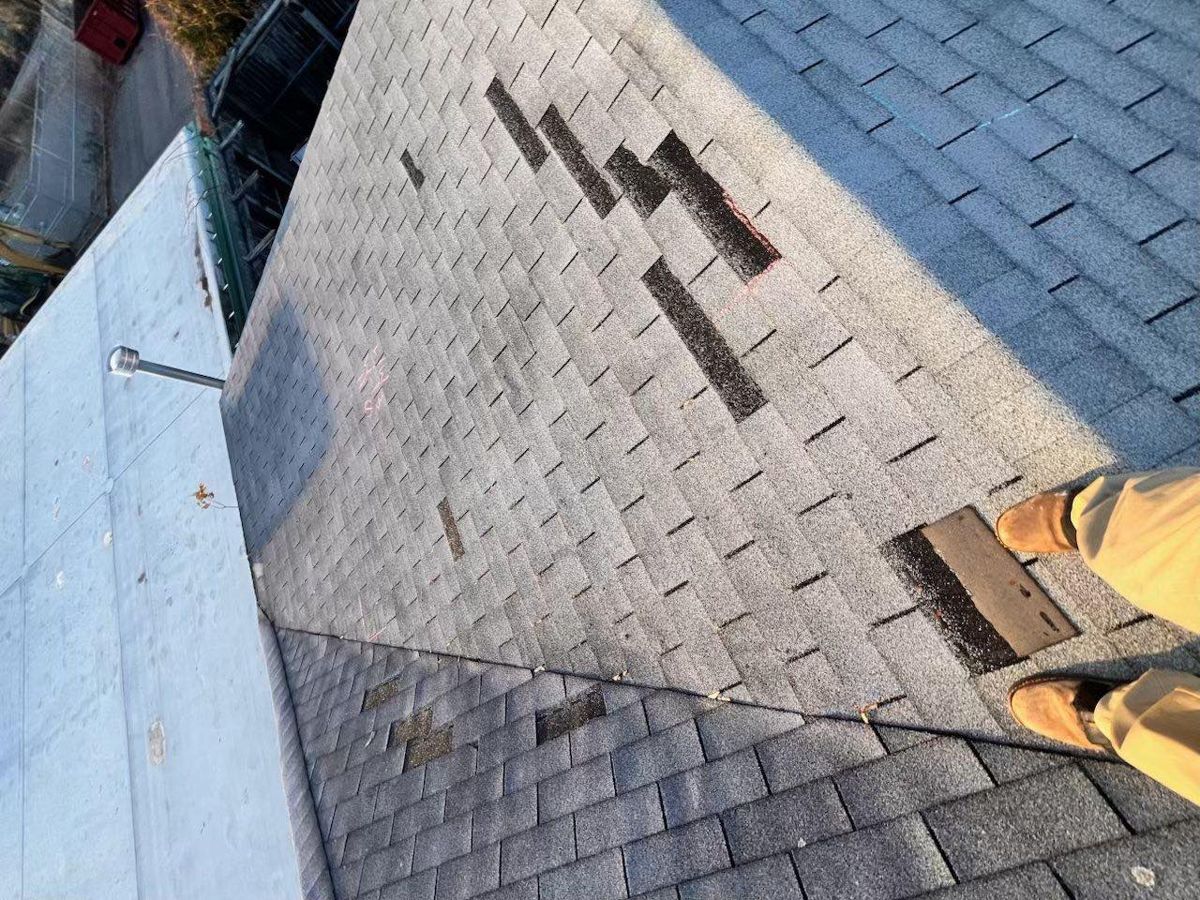
Wind damage is usually easier to see than hail damage, but not always: a shingle can look intact and still no longer be sealed down. Wind damage follows the storm's direction and is usually worse on exposed sides, corners, edges and around roof openings.
Lifted and creased
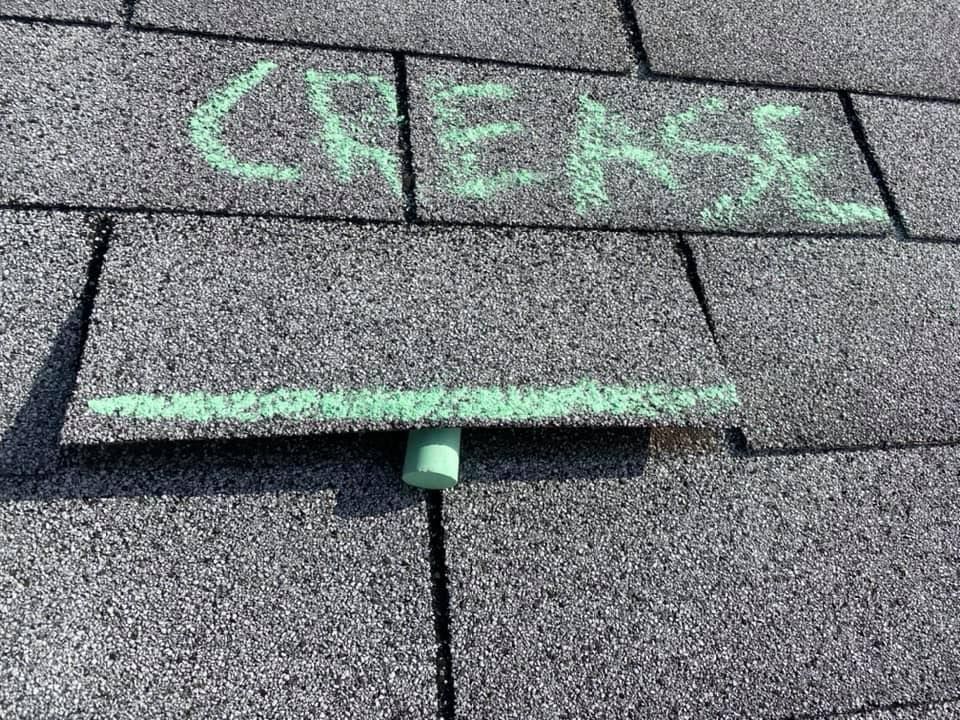
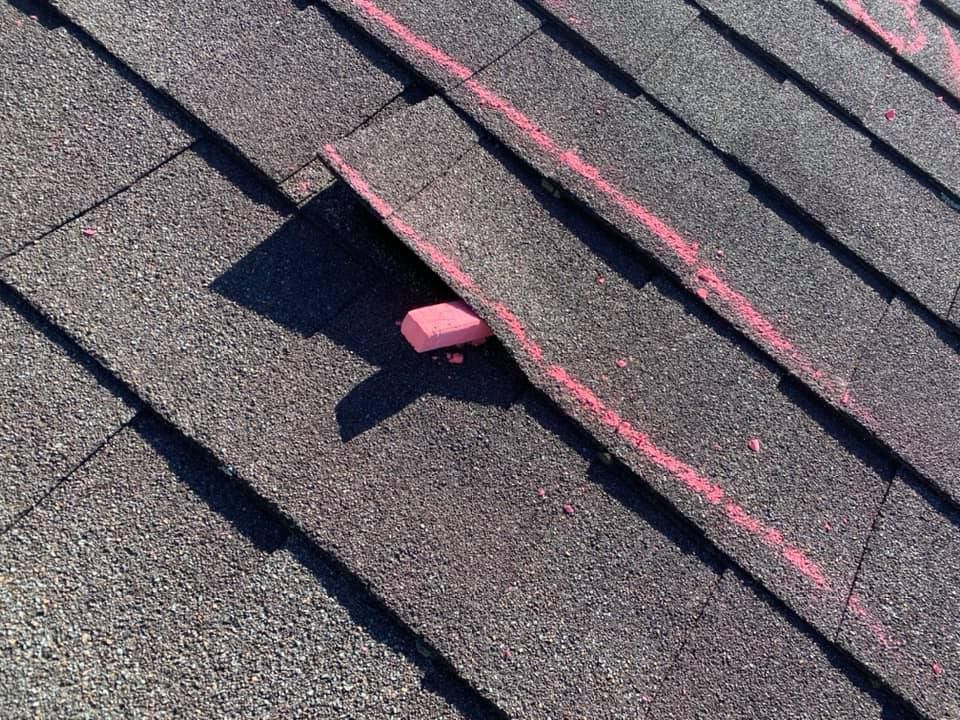
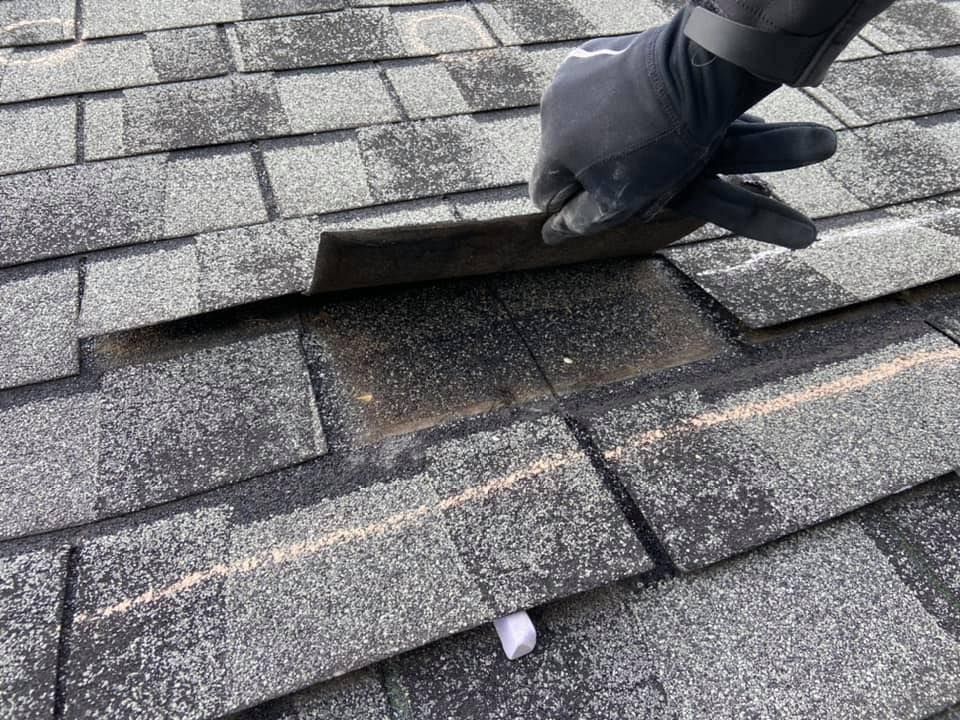
Wind lifts shingles. A lifted shingle can crease at the nail line. A creased shingle has a broken seal and is compromised even if it settles back flat.
Looks fine, not sealed
The inspector checks the seal by gently lifting the edge.
Missing shingles
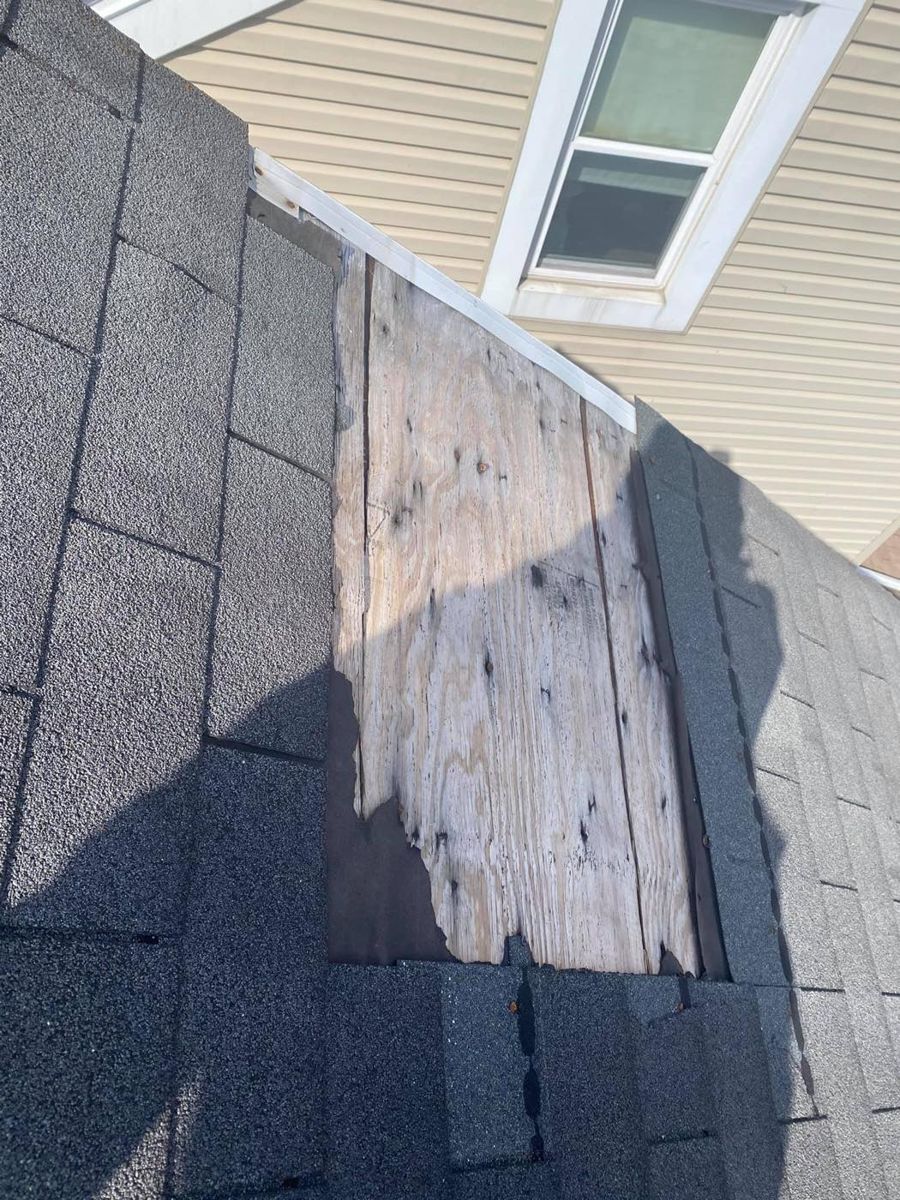
Missing shingles show exposed nail heads, torn mat or bare underlayment. Clean, un-rusted nail heads can indicate recent damage.
Ridge caps are most exposed
Ridge caps sit highest and are among the most wind-exposed parts of the roof. Missing, lifted or creased ridge pieces are strong wind indicators.
Edges, corners and siding
Wind pressure is higher at roof edges, rakes and corners than in the middle of a slope, so damage there is usually worse. Wind can also blow siding panels off, buckle them or pull them out of their trim.
How we inspect
Our inspection takes about an hour, and there is no charge for the inspection or the report. We inspect in a set order, and every finding is photographed; each photo in the report carries a short caption naming the damage and where it is. Here is what happens, step by step.
We schedule, then identify the roof
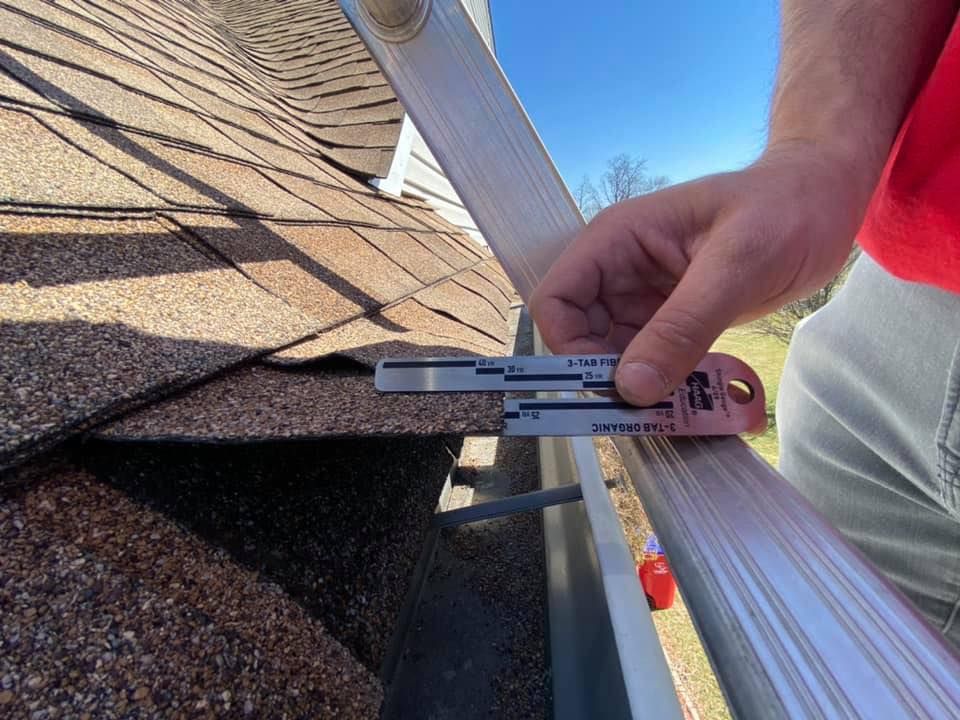
Call 215-638-7276 or request an inspection online to schedule. We identify the shingle type and manufacturer with a shingle gauge placed at the eave and measure the shingle exposure (the visible height of each row, or course) with a tape. Today's laminate shingles have a 5-5/8 in. exposure; older 5 in. laminates are no longer made, so new shingles may not line up with the older rows and a matching repair may not be possible.
We start on the ground
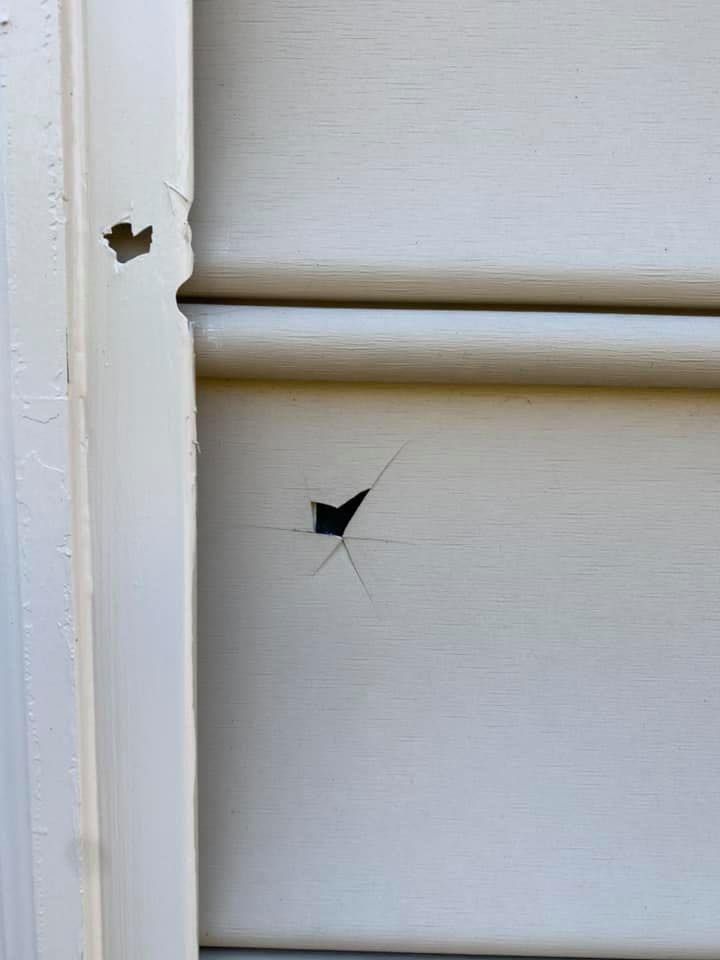
We inspect in a set order: ground-level metals (gutters, downspouts, window trim, A/C unit), then siding and trim, then the roof, then any interior damage. Dents are compared between the sides facing the storm and the sheltered sides.
We chalk the metals
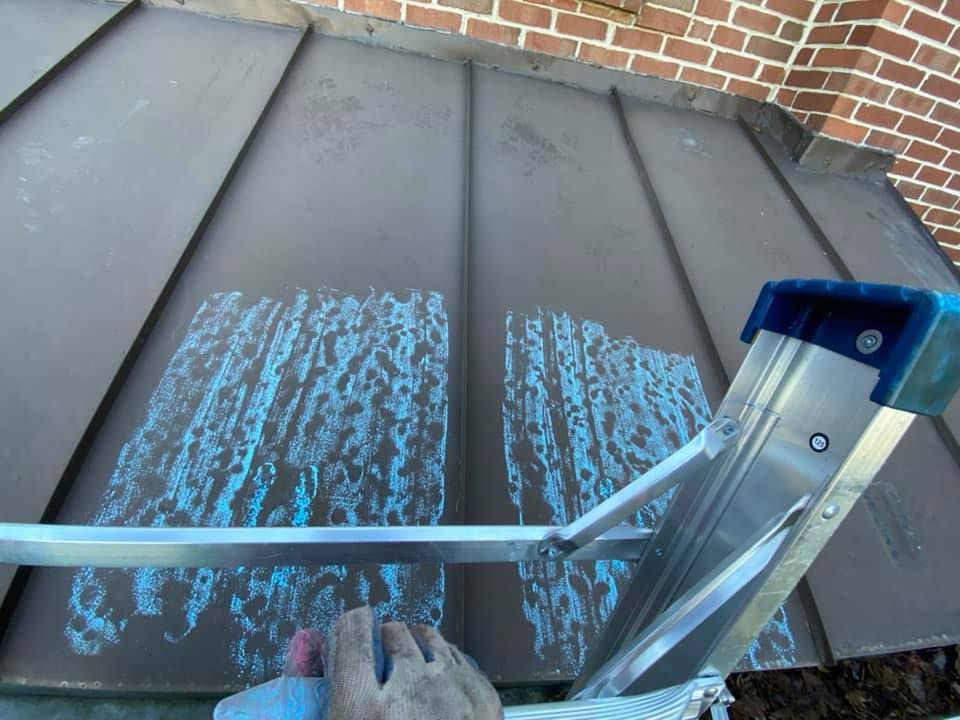
Carpenter's chalk dragged sideways across metal skips over dents, so each dent shows as an unmarked circle. Each chalked surface gets a close-up with a size reference (ruler, quarter or golf ball) and a wide shot showing where it is.
We walk every slope
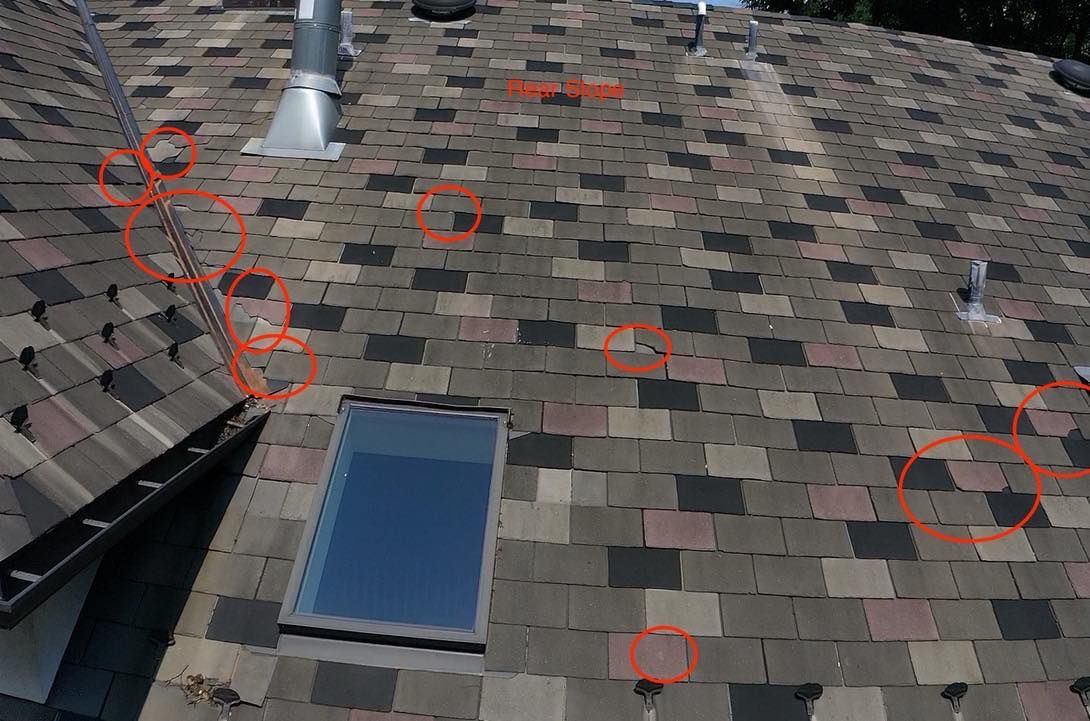
Slope by slope, we check the field of the roof, valleys, chimney surrounds, ridge and hip caps and the metals for hail bruises, creased, lifted or missing shingles, broken seals and exposed nail heads. On delicate roofs a chicken ladder or foam pads spread weight.
We count hits in test squares
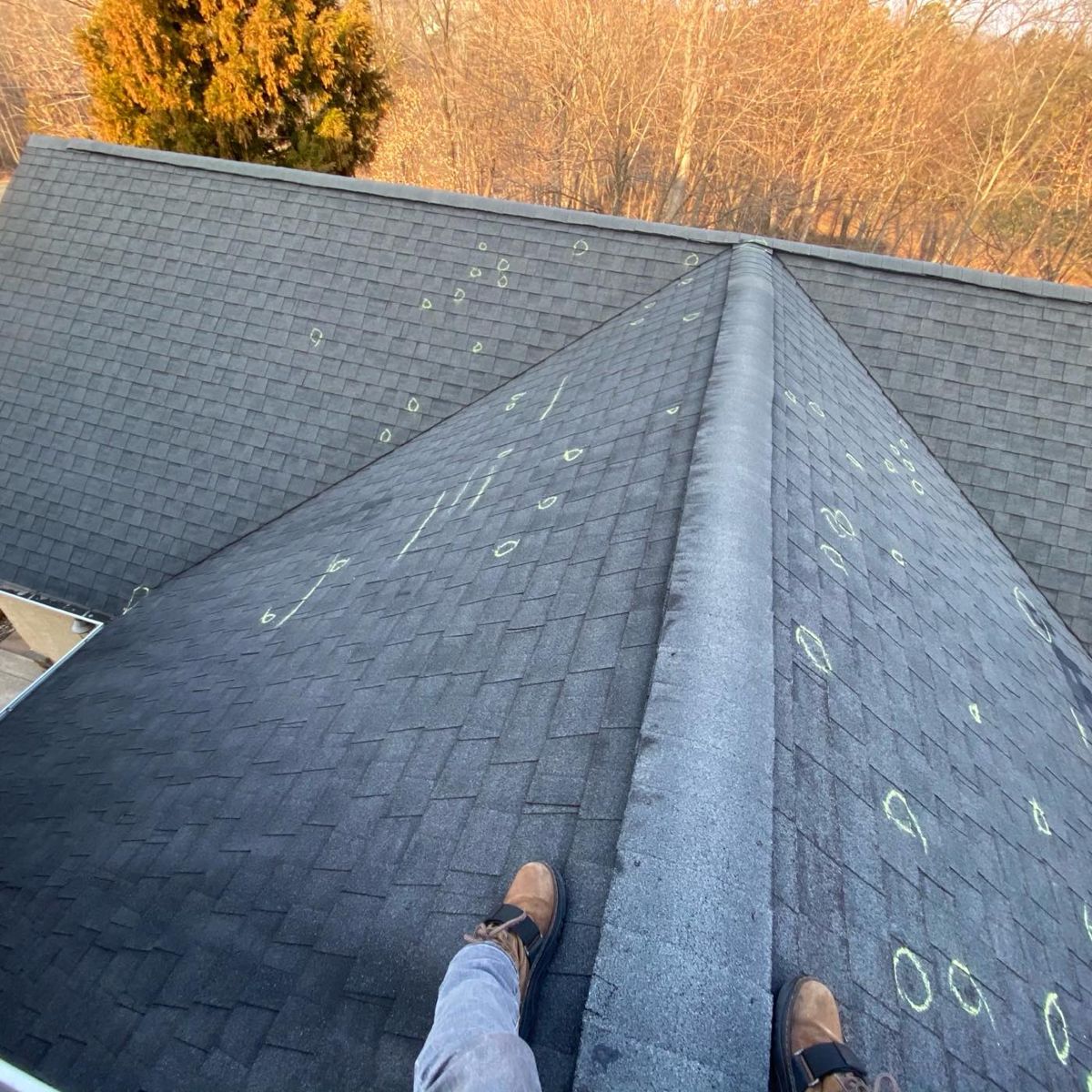
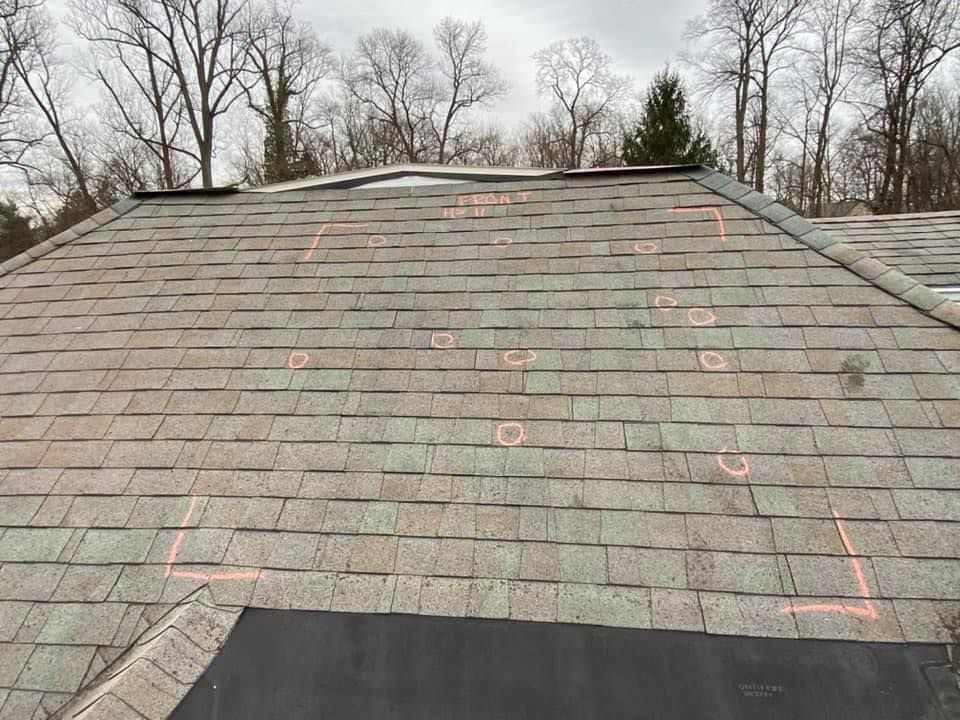
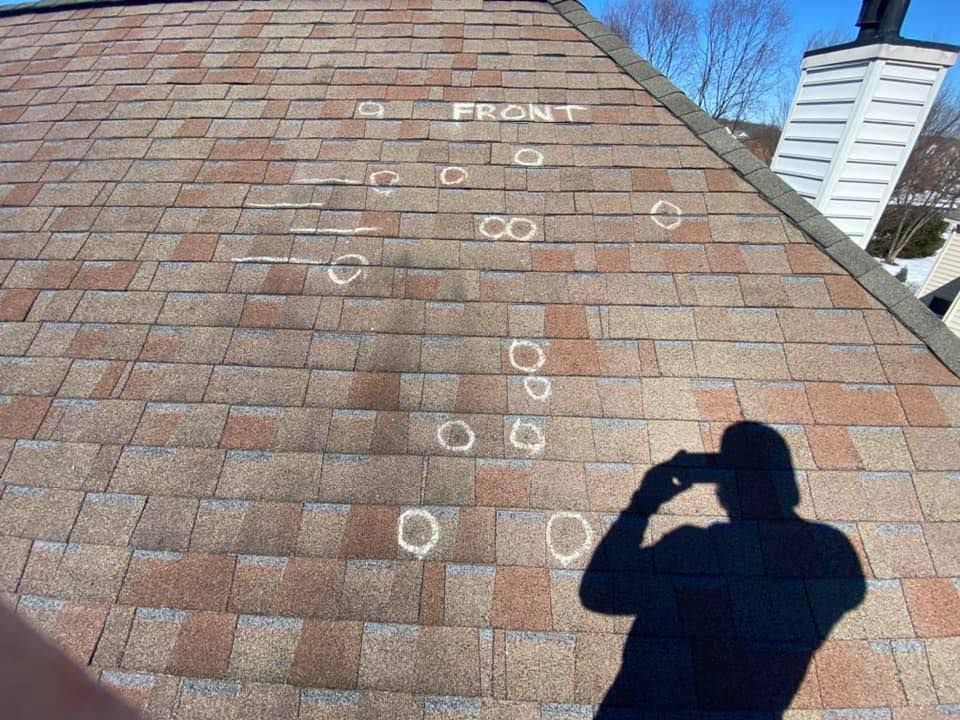
A 10 ft by 10 ft test square is chalked on each slope. Every hit inside it is circled and counted, and the count is written on the roof in chalk, for example "H=12", slope by slope.
We photograph every finding twice
Each chalked hit gets a close-up showing the dent and displaced granules, plus a wide shot of the slope. The inspector presses each dent; a soft spot can mean the mat underneath is fractured. Blisters, manufacturing marks, foot traffic and age are told apart from hail by shape, location and pattern, and documented separately.
We check the details
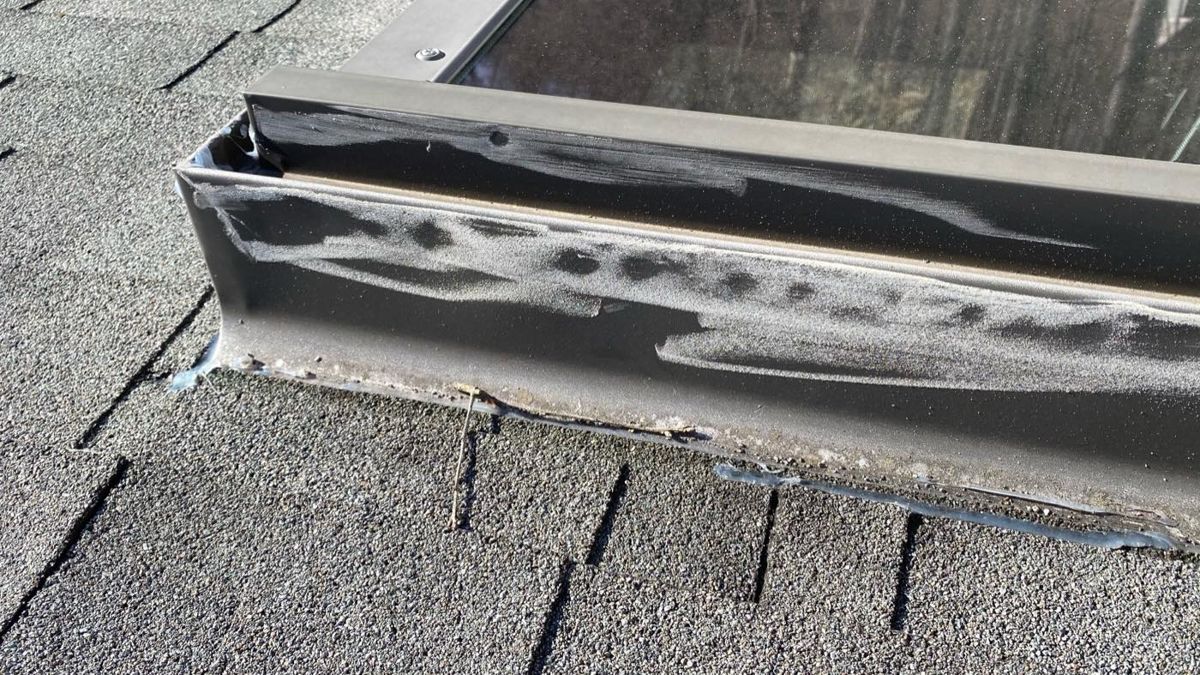
Chimney flashing, step and counter-flashing, skylights, vents, pipe boots and valleys are each checked for storm damage and for how they were installed, which affects whether they can be repaired.
We look inside if needed
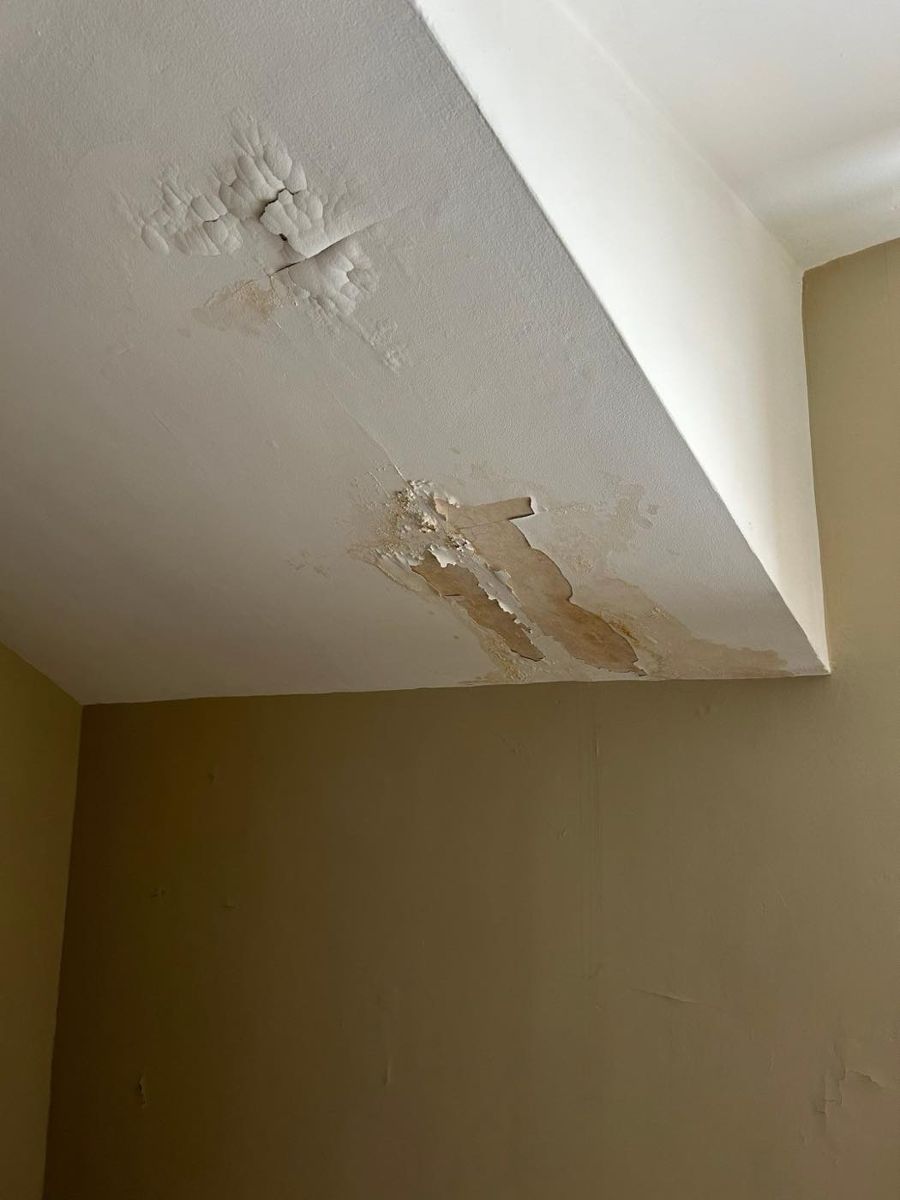
When water has come in, ceiling and wall stains and attic evidence are documented to trace the path from the roof opening to the inside.
We measure from the air
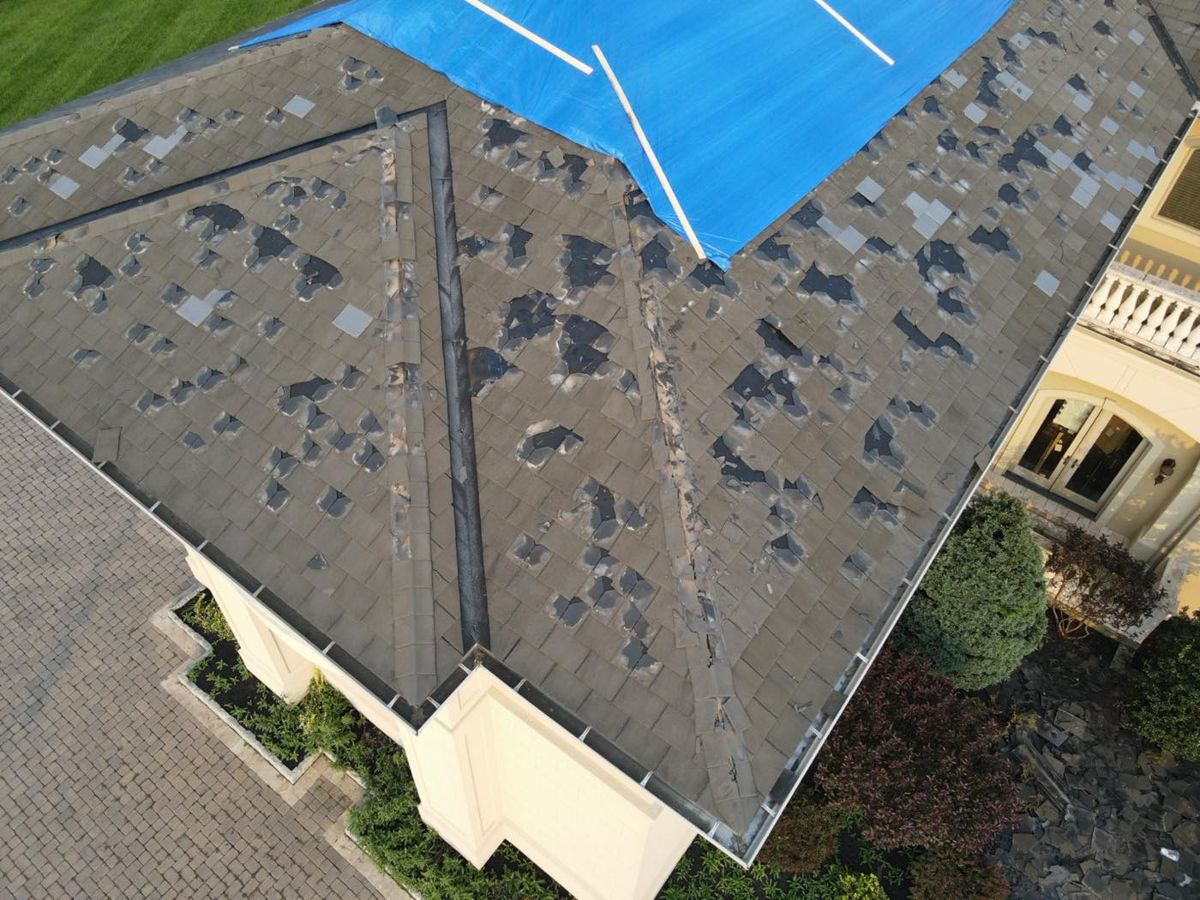
A drone captures the whole roof, including the chalked test squares from above. Roof quantities come from a measured aerial roof report: total area, each roof section, slope steepness and a material allowance.
We verify the storm
We check our findings against National Weather Service and NOAA storm records to confirm the storm's date, hail size and direction. The report lists confirmed hail and wind reports near the property, with size, distance and source.
What we prepare for you
After the inspection, you receive a set of written documents built from what we found on your home. When we find storm damage, you usually receive the forensic report, the estimate and the code report before your insurance company issues its scope of work. After the scope arrives, we add the scope comparison.
Forensic Causation Report
The centerpiece: our written assessment of what caused the damage, how severe it is and what repair is needed. It records observed conditions, with official storm data and captioned photos organized by damage category. It is signed by USA Roof Masters' CEO and states that USA Roof Masters is a roofing contractor.
X Style Build
A line-item estimate in the same format the insurance industry uses: code, description, quantity, unit, unit price and total, grouped by trade (roofing, gutters, general items, debris removal) with subtotals, tax and total replacement cost. Quantities come from the measured aerial roof report; gutter lengths come from measured eave length.
Building Code Compliance Report
The local building-code and manufacturer installation requirements that apply to a replacement, with an annotated diagram of your house showing where each item applies, detail pages, installation diagrams and a summary schedule. Typical items, depending on the home and local code: tear-off, underlayment, ice and water barrier where it applies, drip edge, ventilation, step flashing, and chimney and pipe flashing.
Scope Comparison Report
Produced after your insurance company issues its scope of work: a line-by-line comparison of your insurance company's scope against what we documented on your roof.

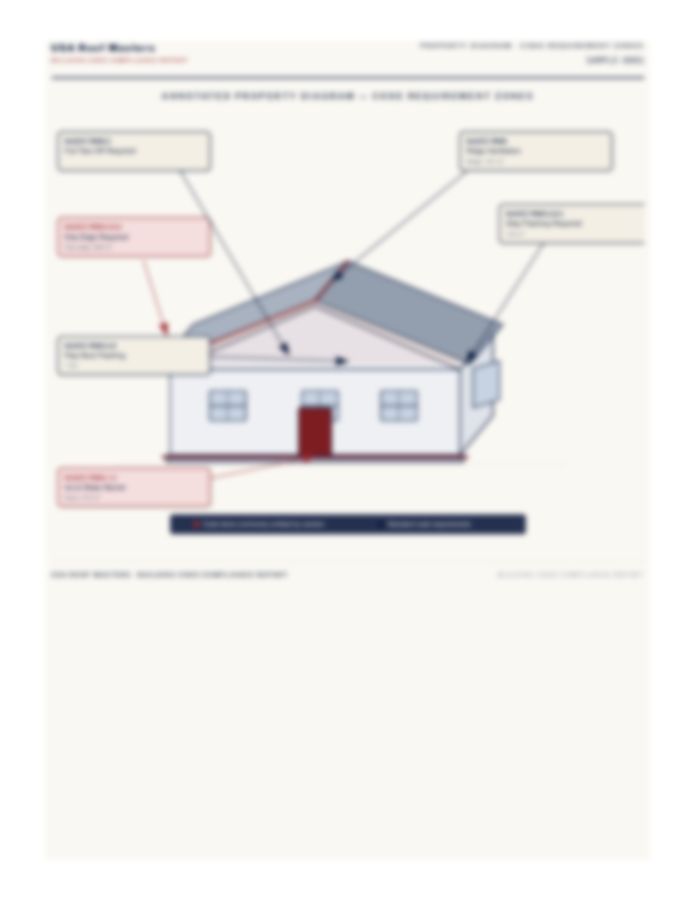
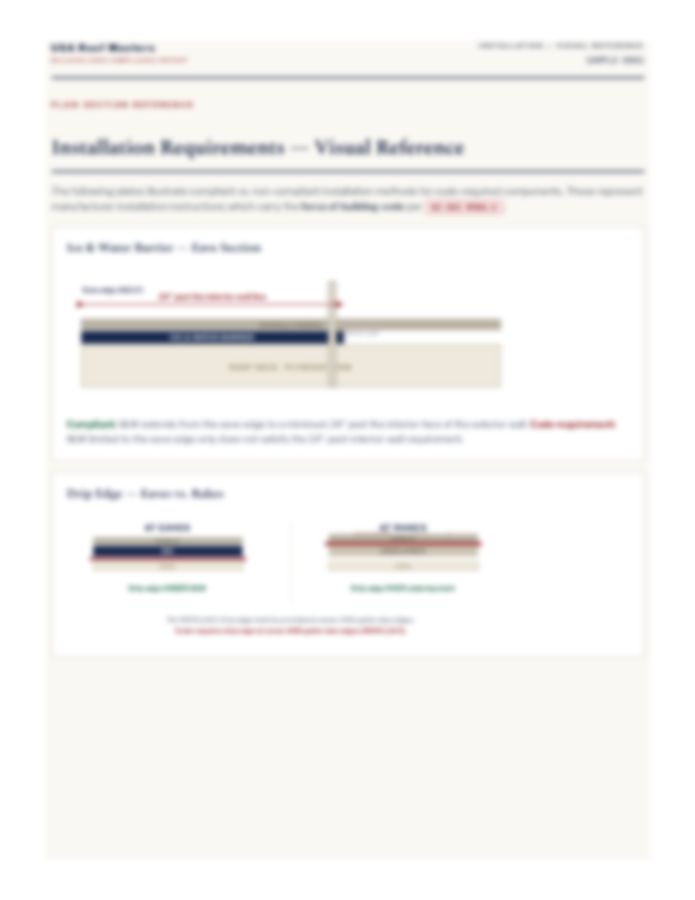
Sample pages of the X Style Build and the Building Code Compliance Report: illustrative, fictional property.
Inside the Forensic Causation Report
- Property & Claim Information. The property and claim details.
- Executive Summary. What was inspected, what was found, repair or replacement.
- Storm Event Overview. Official government weather data: hail size, wind speed and how close the reports were to the home.
- Primary Damage Observations. The main damage we observed on the property.
- Damage Threshold Analysis. The storm's reported hail size compared with the hail size generally known to damage each material.
- Damage Findings & Photo Analysis. Captioned photos, organized by damage category.
- Causation Analysis & Damage Criteria. A table comparing hail, wear and manufacturing defects against what was observed.
- Method of Repair. Existing roof system, estimated age, repair or replacement.
- Code Compliance Requirements. Building-code items that apply to the work.
- Conclusions & Recommendations. The cause of damage and a recommended repair or replacement scope.

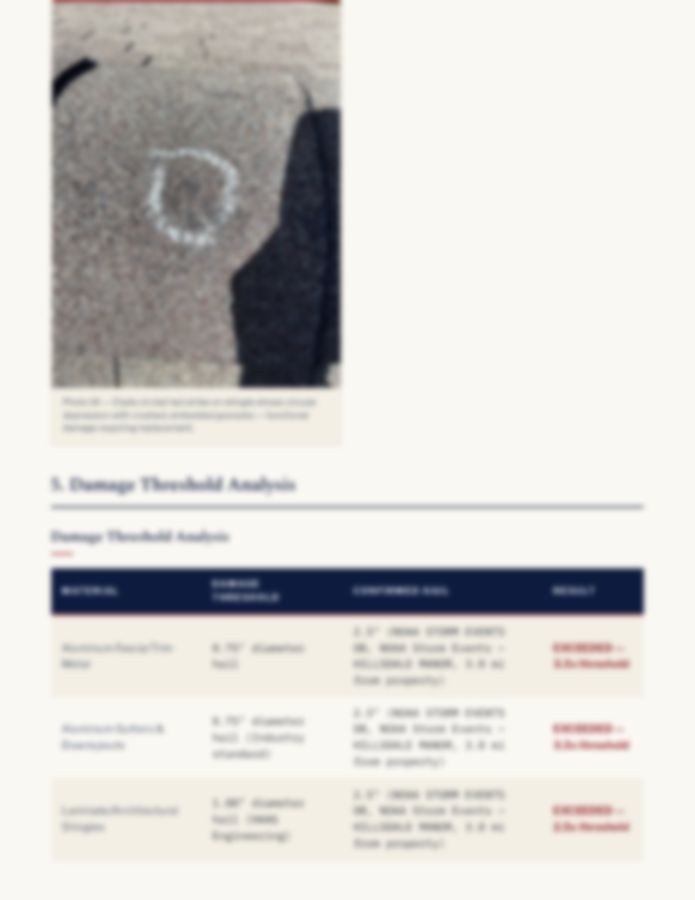
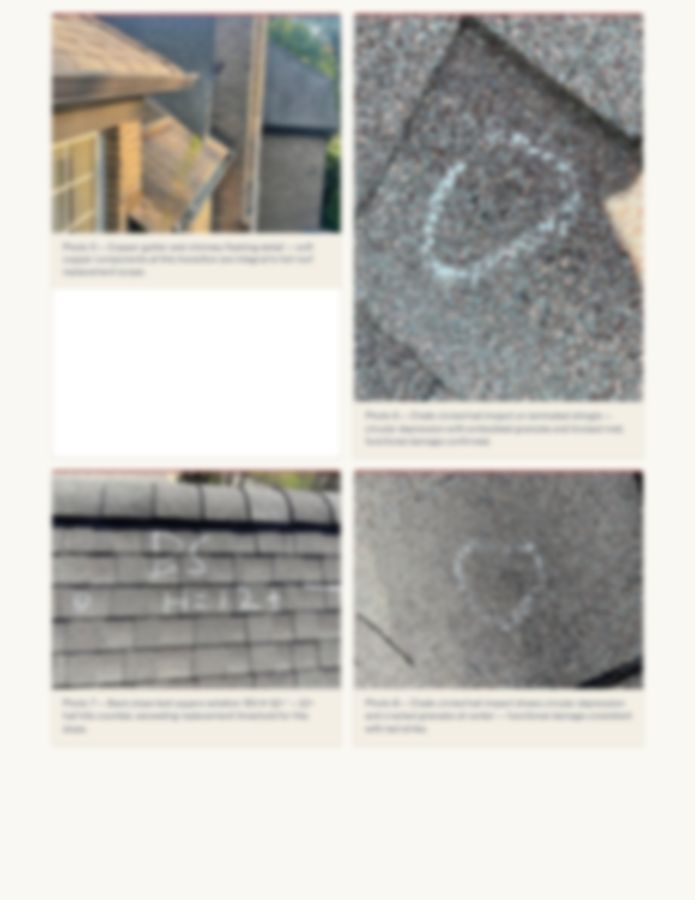
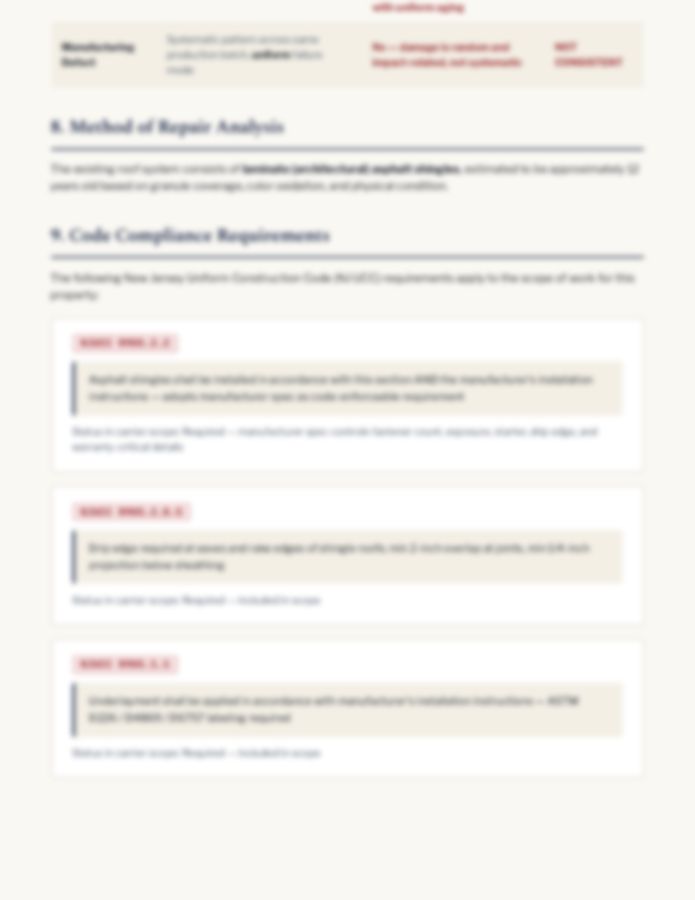
Sample pages of the Forensic Causation Report: illustrative, fictional property.
How you receive it
You receive the Forensic Causation Report by e-mail after the inspection. Over the next days, a few short e-mails follow: a hail-damage guide (with a PDF copy of this inspection guide), help preparing for the adjuster's visit, and information about our company with photos of our recent work. Keep the report with your claim records.
Your report and your insurance company
The claim is yours. You report it to your own insurance company, and we can walk you through the call.
Send your insurance company the Forensic Causation Report, the estimate and the code report when you file, or as soon as you have them. We send our findings to your insurer only with your authorization.
Your insurance company will send an adjuster to inspect and document the storm damage. The adjuster's report drives the scope of work and the payment.
Ask for an adjuster visit our team can attend
Ask your insurance company to schedule the adjuster’s inspection at a time our team can attend, and tell us the date and time as soon as you have it: call 215-638-7276. Our project manager plans to walk the roof with the adjuster and point out the damage documented in the report.
Before the adjuster arrives
- Note any interior leaks or stains.
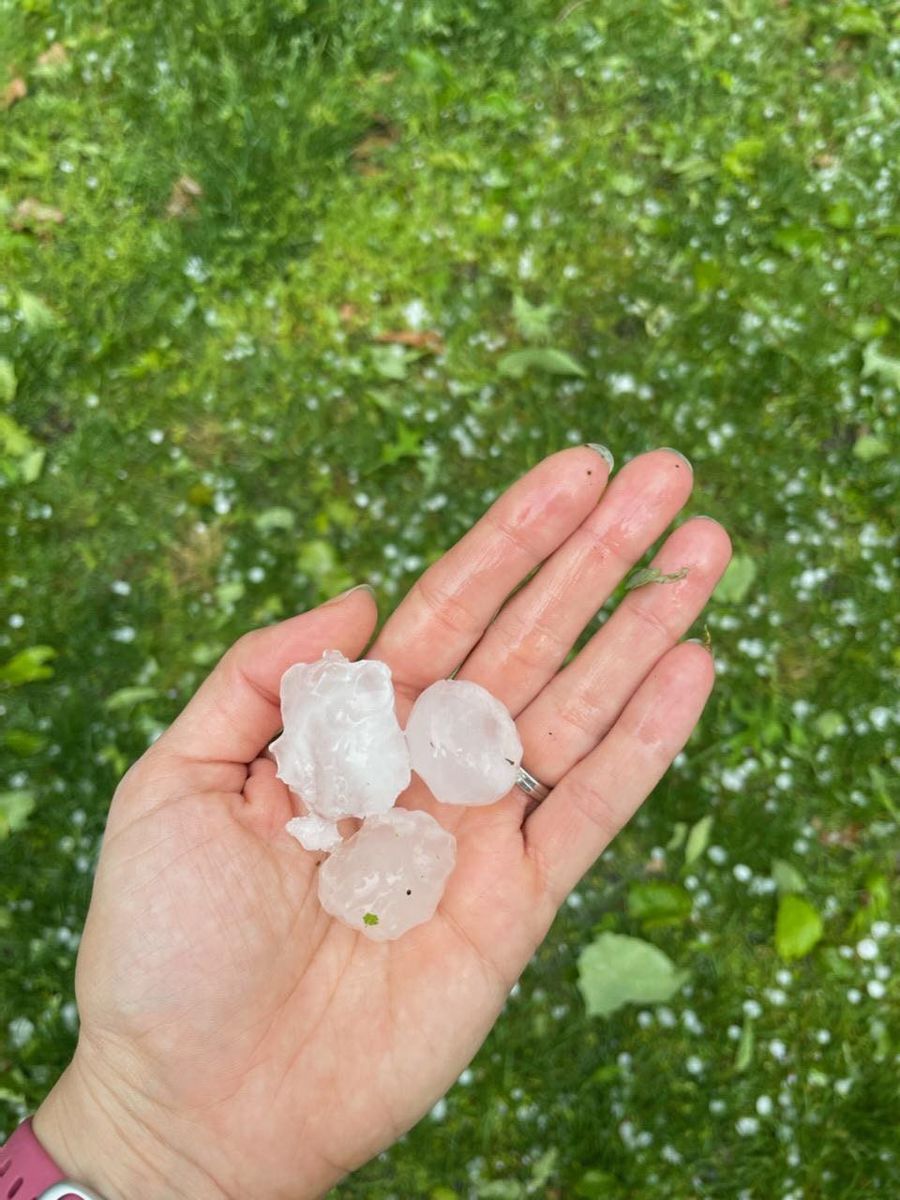
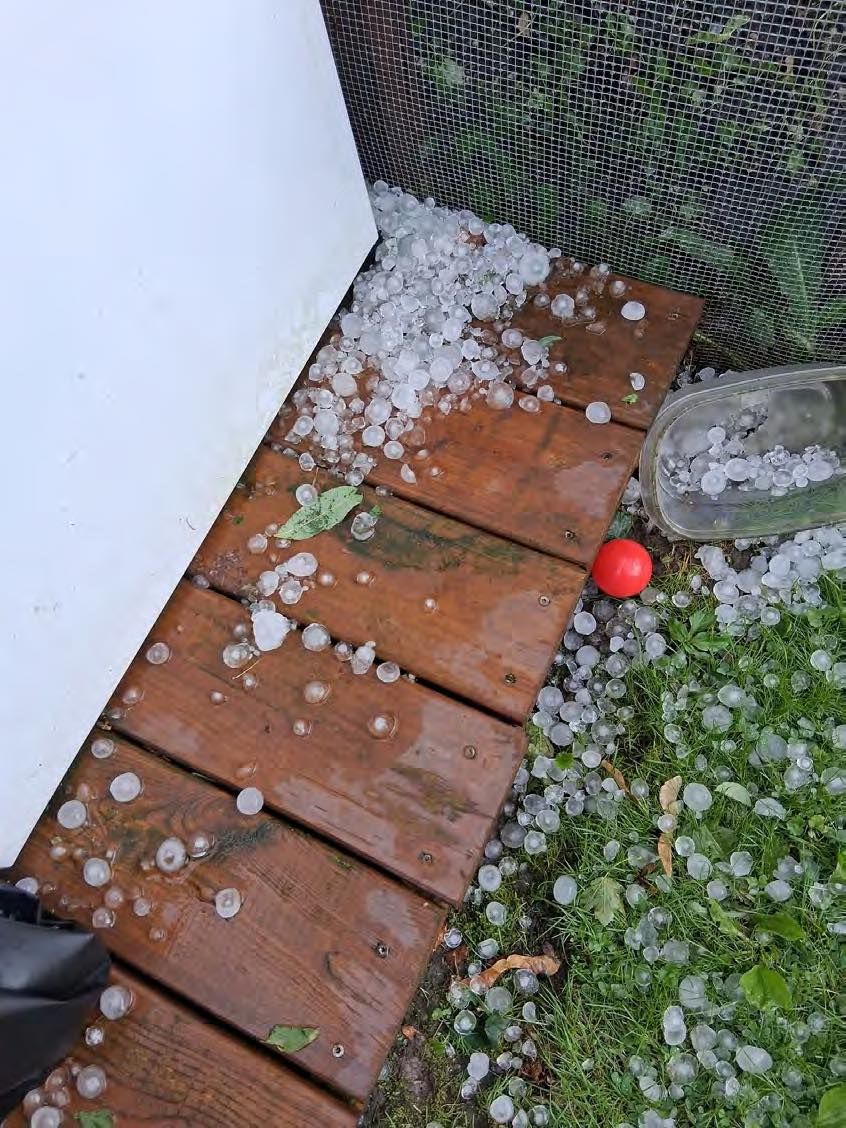
- Have any dated storm photos ready on your phone: hail on the ground, on the deck, on cars.
- Walk the yard for dents on patio furniture, grills, fences, sheds, A/C fins, screens, siding, gutters and vehicles.
- Note anything that broke that day.
- Tell us the date and time of the adjuster's visit.
On the day
- Be home if you can, or tell us who will be.
- Have your claim number handy.
- Show the adjuster interior evidence and property damage first.
- Then the adjuster and our project manager go up on the roof. Please do not go on the roof yourself.
- The adjuster usually needs 45 to 90 minutes.
After the visit
- Ask the adjuster for a copy of their report or scope when it is ready.
- Send us a copy as soon as it arrives, so we can compare it line by line with what we documented.
- If your insurance company has not sent its scope, you can call them for a status update.
- When your insurer issues its decision, we review it with you and, if work is approved, schedule the installation. Any replacement depends on the inspection findings and your own insurer's approval.
USA Roof Masters is your roofing contractor. We document storm damage and perform the repair or replacement your insurance carrier approves; we do not adjust claims or negotiate coverage.
Next steps
Call 215-638-7276 or request an inspection online to schedule your inspection. The inspection takes about an hour, and there is no charge for the inspection or the report. If we find damage, we show you the photos; if your roof has no damage, we tell you. You receive the Forensic Causation Report by e-mail after the inspection. When the adjuster’s visit is set, tell us the date so our project manager can be there.
USA Roof Masters, 219 Orthodox Dr, Richboro, PA 18954. Pennsylvania home improvement contractor PA183645. New Jersey home improvement contractor 13VH07584100. Owens Corning Platinum Preferred Contractor.